Ethics Debate: Can AI Replace Doctors in Healthcare?
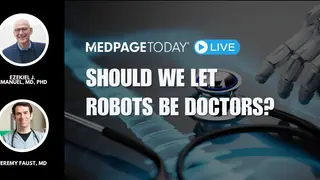
A live webinar will explore whether artificial intelligence should be granted autonomous roles in medicine, following a controversial op-ed by bioethicist Ezekiel Emanuel. While organizations like the AMA advocate for AI as an assistant only, Emanuel argues that algorithmic medical decisions could reduce errors and administrative strain. The discussion reflects growing tension over AI’s expanding role in clinical care.
On October 29, 2026, a live webinar hosted by MedPage Today will feature bioethicist and oncologist Ezekiel J. Emanuel, MD, PhD, discussing his controversial stance that artificial intelligence should be granted autonomous decision-making roles in medicine. This follows an op-ed he published in The Atlantic, where he argued that the medical field is "largely algorithmic" and that AI could reduce diagnostic errors and administrative burdens. His position directly challenges the American Medical Association’s (AMA) policy, which restricts AI to an assistive role only. The debate gained urgency after HHS Secretary Robert F. Kennedy Jr. claimed AI can outperform physicians in diagnosis and prescribing, prompting swift pushback from physician groups concerned about professional autonomy and patient safety. Other experts have warned that unchecked AI use may lead to “meaningless” research and encroach on clinical judgment. The webinar, moderated by Jeremy Faust, MD, editor-in-chief at MedPage Today, will allow public engagement through submitted questions and will be available as a recording for those unable to attend live.
The tension reflects broader societal anxieties about technological disruption in high-stakes professions. While Emanuel envisions AI as a tool to enhance clinical accuracy and efficiency, critics fear it may erode the human element of care and create accountability gaps. The AMA’s formal policy stands as a counterweight to what some see as an overreach by tech
The debate around AI in healthcare could reshape patient trust, physician roles, and institutional accountability. If AI systems gain more authority in diagnosis and treatment planning, patients may experience faster care but also face new risks if errors occur without clear human oversight. Physicians may feel displaced or pressured to defer to algorithmic recommendations, potentially altering the doctor-patient relationship. Institutions like hospitals and insurance providers could adopt AI tools to cut costs and improve throughput, possibly accelerating a shift toward data-driven medicine. A comparable precedent is the introduction of electronic health records (EHRs), which initially promised efficiency but led to physician burnout and workflow disruptions. The current moment may follow a similar arc—initial enthusiasm followed by scrutiny over unintended consequences. What to watch for next is whether regulatory agencies like the FDA will develop standards for AI autonomy in clinic