AI-Powered System Could Map Ideal Locations for Future Lunar and Martian Bases
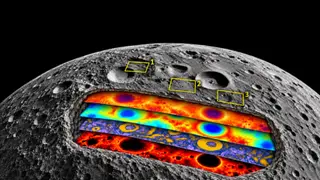
A new artificial intelligence framework called LUMINA, developed by researchers at The Ohio State University, analyzes diverse lunar data to pinpoint optimal landing sites for human outposts. By evaluating terrain hazards, water ice availability, scientific potential, and geological features, the system aims to enhance mission planning for sustainable space habitats. The model is designed to extend beyond the Moon, potentially guiding future missions to Mars as well.
In October 2026, researchers from The Ohio State University unveiled LUMINA, an artificial intelligence framework designed to identify optimal landing sites for future lunar and potentially Martian human outposts. Presented at the 58th Annual Meeting of the Division for Planetary Sciences (DPS 58), the system analyzes diverse lunar data—including topography, terrain hazards, water ice distribution, geological features, and scientific value—to prioritize locations that balance safety, resource availability, and mission efficiency. The model builds on earlier work like LLaVA-LE, a large language-and-vision assistant for lunar exploration introduced in 2026 and available via arXiv and GitHub. NASA’s Artemis program, aiming to return astronauts to the Moon by 2028, provides the immediate context for this research, as the agency seeks to establish a permanent human presence through its Moon to Mars Architecture. This strategic framework emphasizes technologies like in-situ resource utilization (ISRU), which relies on local materials such as water ice for life support and fuel production—key goals that LUMINA is designed to support. The team, led by PhD candidate Gokce Inal, envisions LUMINA extending beyond the Moon to aid future Mars missions, though no specific timeline or deployment plan has been announced. What remains unresolved is how LUMINA will integrate with existing mission planning systems, whether it will be adopted by NASA or other space agencies, and how it will perf
LUMINA could significantly accelerate the pace of planetary mission planning by automating complex data synthesis that previously required extensive human analysis. As space agencies like NASA prepare for sustained lunar operations and eventual Mars missions, AI tools that rapidly evaluate terrain, resources, and risk may become essential for reducing mission costs and increasing safety. The broader impact extends to private space ventures and international collaborations, which could adopt similar frameworks to streamline site selection and reduce reliance on Earth-based logistics. A comparable precedent is the use of machine learning in Earth observation—such as Google’s AI for climate modeling—which transformed how governments and organizations interpret environmental data. LUMINA may follow a similar trajectory, evolving from a research prototype into a standard tool across space agencies and commercial operators. However, its real-world effectiveness will depend on data quality, t