Kongsberg awarded major contract to enhance autonomous underwater drones for U.S. Navy
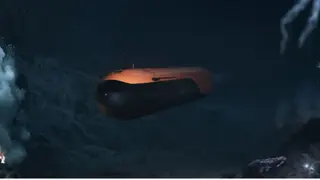
Kongsberg Gruppen ASA has received a $54 million contract from the U.S. Navy to supply autonomous underwater vehicles and related systems. The project aims to improve surveillance, reconnaissance, and undersea operations through advanced robotics and sensor integration. This expansion strengthens naval capabilities in contested maritime environments.
Kongsberg Gruppen ASA has been awarded a $54 million contract by the U.S. Navy to deliver autonomous underwater vehicles (AUVs) and associated systems. The agreement is designed to enhance undersea surveillance, reconnaissance, and operational capabilities in complex maritime environments. While specific delivery timelines or deployment locations are not detailed in the available information, the project centers on integrating advanced robotics and sensor technologies into next-generation AUVs. This contract marks a significant expansion of Kongsberg’s role in U.S. defense technology, particularly in unmanned undersea systems.
The development follows growing strategic interest by the U.S. Navy in autonomous platforms to maintain superiority in contested underwater domains. As naval operations increasingly involve high-risk environments such as near adversarial coastlines or in deep-sea zones, reliance on human-operated vessels is being reduced in favor of remote and autonomous systems. Kongsberg’s prior involvement in maritime technology and defense systems likely positioned it as a qualified candidate for this contract, though no prior contracts are mentioned in the provided material.
The U.S. Navy seeks to strengthen its undersea intelligence-gathering and operational flexibility through these advanced AUVs, which could support missions ranging from mine detection to monitoring submarine activity. Kongsberg, as the contractor, aims to deliver systems that meet rigorous mi
The deployment of autonomous underwater drones under this contract could reshape maritime security dynamics by enabling persistent surveillance in sensitive or contested regions without risking personnel. Navies and defense contractors may accelerate investment in unmanned systems, potentially shifting military spending priorities toward robotics and AI-driven platforms. This move may also affect commercial sectors reliant on undersea infrastructure—such as telecommunications and offshore energy—by increasing the risk of detection or disruption during operations. A comparable precedent is the U.S. Navy’s earlier adoption of unmanned aerial vehicles (UAVs) like the MQ-8 Fire Scout, which gradually transformed surveillance and reconnaissance roles in the 2010s. The current AUV initiative may follow a similar trajectory: beginning with niche applications before expanding into broader operational use. However, challenges around reliability, cybersecurity, and international norms for under