Hedge Funds Retreat from AI Stocks Amid $5 Trillion Market Plunge
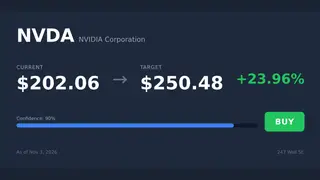
A sharp sell-off has erased roughly $5 trillion in market value across 47 AI and chip stocks over three weeks, with hedge funds reducing their exposure to AI for the first time since early 2023. Despite recent gains, major players like NVIDIA, Alphabet, and TSMC have seen steep declines, and Goldman Sachs warns the downturn may still be in its early stages. The upcoming NVIDIA earnings report could determine whether the sell-off stabilizes or accelerates.
Over a three-week period beginning October 6, 2026, 47 major AI and semiconductor stocks lost approximately $5 trillion in market value, with NVIDIA, Alphabet, SpaceX, and TSMC among the hardest hit—each shedding hundreds of billions. NVIDIA’s share price fell 15.5% from its October 6 high of $239.24 to close at $202.06 on November 2, while the Invesco QQQ Trust (QQQ) dropped 10.3% from its October peak. This sharp correction marks the first time since early 2023 that hedge funds have become underweight in AI stocks, having reduced their overall stock exposure by more than 8% since June—the largest retreat since at least 2017. Goldman Sachs data indicate that hedge funds sold AI holdings five consecutive days in October, reversing all purchases made since early 2025, and did so at a pace three-and-a-half times faster than they opened new short positions—suggesting risk reduction rather than outright bearishness on AI’s long-term prospects. Despite this, the sell-off appears far from over: hedge fund AI holdings still rank in the top 17% historically, and the Magnificent Seven stocks were net sold in four of the last five sessions.
The broader context includes record household wealth tied to equities—48% of financial assets in Q2 2026, up from the dot-com peak—and concentrated ownership among the top 10% of households, which drives much of consumer spending. This makes a sustained correction in AI stocks a systemic risk, per Bank of America economists. Morgan Stanley’s prime
The $5 trillion market plunge in AI and chip stocks could have ripple effects across the broader economy, particularly through wealth erosion among affluent households who hold a disproportionate share of equities. As stock ownership correlates with spending power, a prolonged correction may dampen consumer demand, potentially affecting sectors beyond tech. The sell-off also reflects growing concerns about market crowding—especially in the Magnificent Seven—where excessive concentration amplifies volatility during sentiment shifts. This situation echoes the dot-com bubble’s final phase, when overvaluation and herd behavior led to a sharp correction that reverberated through financial markets and real economic activity. Today’s event differs in that AI remains fundamentally transformative, but valuation pressures and profit-taking are now surfacing. What may follow depends on NVIDIA’s earnings report: if it disappoints, further selloffs could spread; if it exceeds expectations, the mark