Placental Inflammation During Pregnancy Linked to Autism-Like Traits in Male Mice
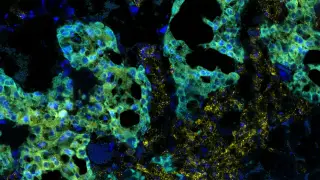
A study at Cold Spring Harbor Laboratory found that inflammation during pregnancy causes structural damage in the placenta, leading to autism-like behaviors in male mice but not females. The findings suggest a biological basis for the higher prevalence of autism in boys and highlight early developmental windows that may be critical for intervention.
In November 2026, researchers at Cold Spring Harbor Laboratory (CSHL) discovered that maternal immune activation during pregnancy—simulated by a viral mimic—led to structural damage in the placental junctional zone of mice, specifically affecting male fetuses and resulting in autism-like behaviors. The critical window for this vulnerability was identified as 12.5 days into gestation, when one-third of exposed fetuses exhibited developmental abnormalities within just 24 hours. This early disruption occurred before sexual differentiation or hormonal surges, suggesting that sex-based differences in fetal response to inflammation may originate at the placental level. The study focused on spongiotrophoblasts—specialized placental cells crucial for maternal immune tolerance—and found that damage to these cells correlated with autism-like traits only in males. Female fetuses showed no such behavioral changes, indicating a possible innate protective mechanism. The research team, led by CSHL Associate Professor Lucas Cheadle and postdoctoral researcher Irene Sanchez Martin, emphasizes that this work challenges the long-held focus on brain development alone, pointing instead to the placenta as an early gateway for neurodevelopmental disorders.
The findings build on decades of research into maternal immune activation (MIA) as a risk factor for autism, but reveal previously unseen timing and sex-specific outcomes. Prior studies had shown MIA could affect fetal development, but not at su
This study may influence prenatal care by prompting greater attention to maternal immune health during early pregnancy, particularly in high-risk cases. If validated in human studies, it could lead to screening tools that assess placental integrity or immune markers as early indicators of neurodevelopmental risk. The findings may also reshape how autism is understood—not solely as a brain-based condition but as one influenced by early maternal-fetal interactions. This shift could affect public health messaging, encouraging interventions like managing infections or inflammation during pregnancy. In the long term, it might spur development of targeted therapies that bolster placental resilience or mimic female protective mechanisms in male fetuses. A comparable precedent is the discovery of fetal alcohol syndrome, which similarly shifted focus from postnatal outcomes to prenatal environmental exposures. However, unlike that case, this research remains preclinical and speculative for huma