Austrian transit firm Doppelmayr launches major Canadian manufacturing expansion
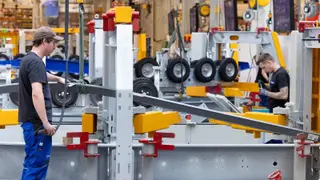
Doppelmayr has opened a new $60 million factory in Saint-Jérôme, Quebec, nearly doubling its Canadian production capacity. The 150,000-square-foot facility consolidates operations and supports the company’s pivot into urban transit, industrial logistics, and agricultural transport systems. This expansion marks a significant step in Doppelmayr’s strategy to diversify beyond ski lifts and strengthen its North American manufacturing footprint.
Doppelmayr, an Austrian firm historically known for manufacturing ski lifts, has launched a major expansion in Canada by opening a $60 million factory in Saint-Jérôme, Quebec. The new 150,000-square-foot facility nearly doubles the company’s existing Canadian production capacity and consolidates its operations into a single, centralized site. This move is part of a broader strategic pivot toward urban transit systems, industrial logistics, and agricultural transport solutions—sectors that represent a significant departure from Doppelmayr’s traditional focus on mountain lift infrastructure. The expansion underscores the company’s intent to strengthen its North American manufacturing presence and diversify its revenue streams beyond seasonal ski resort contracts.
The decision follows a series of strategic shifts aimed at reducing reliance on cyclical tourism markets and capitalizing on growing demand for automated and sustainable transport solutions in urban and industrial settings. While the material does not specify prior announcements or timelines, the scale of the investment suggests this is a deliberate, long-term commitment to North American market integration. Doppelmayr’s leadership likely sees Canada as a strategic gateway to broader North American markets, leveraging proximity to U.S. industrial hubs and access to skilled labor in Quebec. The company’s goals appear to include increasing supply chain resilience, reducing production lead times, and positioning itself a
Doppelmayr’s move into urban and industrial transport systems could signal a broader trend of infrastructure firms diversifying beyond traditional niches to meet evolving mobility needs. As cities seek sustainable alternatives to car-dependent transit, automated people movers and cargo transport systems may gain traction, potentially reshaping regional transportation networks. The expansion in Saint-Jérôme may stimulate local economic activity through job creation and supply chain development, particularly in Quebec’s manufacturing sector. However, the long-term societal impact depends on how widely these new systems are adopted—especially in smaller urban centers or rural industrial zones. Comparable to how Siemens and Alstom expanded into smart transit solutions in Europe, Doppelmayr’s pivot could set a precedent for other specialized engineering firms to reposition themselves in emerging mobility markets. The success of this venture may influence investment patterns in North Americ