Older Adults Show Greater Generosity Toward Strangers, Study Finds
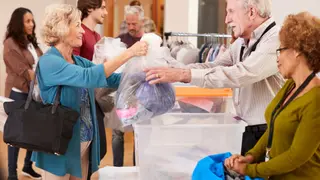
A cross-cultural study of adults in the U.S. and China reveals that older individuals are more likely to give generously to strangers and charity compared to younger adults, even after accounting for cultural and socioeconomic differences. The findings challenge the assumption that aging leads to self-focus, instead suggesting a shift toward greater prosocial behavior. Generosity was also linked to values like equality and connection, while achievement-oriented individuals gave less.
A 2026 cross-cultural study led by Yi Lu, assistant professor of psychology at Western Kentucky University, analyzed generosity patterns among nearly 1,000 adults in the United States and China. The research found that older adults were consistently more generous than younger adults when making hypothetical decisions about sharing money with people ranging from close family to strangers, and they reported higher levels of charitable giving. This pattern held true even after controlling for cultural values, socioeconomic status, and other background factors. Notably, the trend appeared in both individualistic (U.S.) and collectivist (China) societies, suggesting a potential universal shift in prosocial behavior with age. The study also revealed that individuals who prioritized equality and emotional closeness gave more overall, while those focused on personal achievement or status gave less. Although the data were based on hypothetical scenarios and self-reported donations—limiting conclusions about real-world behavior—the findings challenge the long-held assumption that aging leads to increased self-focus. Lu, who conducted the research with colleagues from The Chinese University of Hong Kong and Peking University, emphasized that older adults may not just be recipients of care but active contributors to community well-being through generosity. However, the study does not establish whether individuals become more generous over time or if generational differences explain the r
This research could reshape public perceptions of aging, particularly in policy and community programs that rely on assumptions about older adults’ self-interest. If older individuals are indeed more inclined to support strangers and charities, it may encourage greater inclusion of seniors in philanthropic initiatives, volunteer networks, and intergenerational service projects. The findings may also influence how healthcare systems and retirement communities design social engagement activities, potentially emphasizing altruistic roles for older adults. Second-order effects could include shifts in charitable giving patterns, with nonprofits adapting outreach strategies to better engage older donors who value connection and equity. A comparable precedent is the 2015 study on "the positivity effect" in aging, which found older adults focus more on emotionally meaningful experiences—this new research extends that idea into prosocial behavior. What remains uncertain is whether these pattern