Ashley Park Pays Homage to Golden Age Glamour in Monochrome Prabal Gurung Gown
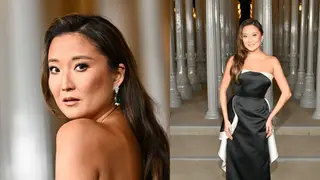
The actress honored Old Hollywood’s iconic style with a sleek black-and-white Atelier Prabal Gurung gown, featuring a strapless bodice and flared hip panels that mimicked vintage train silhouettes. The monochromatic design echoed 1930s bias-cut gowns and 1950s hourglass shapes, drawing inspiration from legends like Marilyn Monroe and Audrey Hepburn. Her look stood as a deliberate nod to the era’s elegance and cinematic influence.
At the 2026 LACMA Art+Film Gala on November 7 in Los Angeles, actress Ashley Park made a striking red carpet appearance in a monochrome Atelier Prabal Gurung gown, drawing direct inspiration from Old Hollywood’s golden age. The strapless design featured a black bodice with white flared hip panels that extended into a dramatic train-like silhouette, echoing the hourglass shapes popularized in the 1950s and the bias-cut elegance of 1930s gowns. Park’s choice marked a departure from her usual vibrant style, signaling a deliberate homage to icons like Marilyn Monroe and Audrey Hepburn. The event honored artist Vija Celmins and filmmaker Denis Villeneuve, with Leonardo DiCaprio and LACMA trustee Eva Chow serving as co-chairs, while Gucci continued its long-standing role as presenting sponsor since 2011. Park’s look was complemented by dangling earrings, a side-parted dark brown hairstyle with loose waves, and bronzy makeup with a subtle smoky eye—elements that enhanced the vintage glamour without overshadowing the gown’s architectural design. The Atelier Prabal Gurung Resort 2027 collection, from which the dress was drawn, appears to have been curated with cinematic nostalgia in mind, aligning fashion with cultural memory.
The broader context includes a recurring trend at high-profile galas of reinterpreting historical fashion for modern audiences. This moment reflects a deeper cultural movement where celebrities and designers alike use red carpet moments as platforms to revive and reinterpret past aesthetics—particularly those tied to female stardom and cinematic legacy. While the article references earlier reports on other attendees like Anya Taylor-Joy and Brittany Snow, who also embraced vintage themes, Park’s monochrome choice stands out for its technical precision in mimicking period silhouettes. The significance lies not only in aesthetic homage but also in how such choices reinforce narratives of timeless elegance in an era dominated by fast fashion and digital trends. What remains unresolved is whether this moment will influence upcoming collections or inspire broader public engagement with vintage fashion, particularly among younger audiences unfamiliar with the golden age’s design principles.
Ashley Park’s monochrome look at the LACMA Art+Film Gala could signal a resurgence of interest in curated historical references within high-fashion red carpet culture. By centering her appearance on 1950s hourglass silhouettes and 1930s bias-cut elegance, she may encourage designers to revisit archival techniques—such as fluid draping and structured tailoring—that emphasize the body’s form in a way modern minimalism often avoids. This could influence upcoming couture seasons, particularly in luxury brands aiming to differentiate themselves through storytelling and craftsmanship. The event’s focus on art and film also suggests that such fashion moments may increasingly serve as bridges between visual media and wearable design, potentially elevating the cultural value of red carpet appearances beyond mere spectacle. A comparable precedent is the 2019 Met Gala’s “Camp: Notes on Fashion,” where historical references were similarly leveraged to provoke dialogue about style and identity. What to watch for next is whether this moment sparks a broader trend in fashion media toward deeper contextualization of vintage aesthetics, especially as younger audiences engage with retro styles through platforms like TikTok and Instagram.