Shelton reflects on missed opportunities in Paris Masters final loss
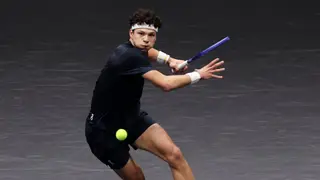
Ben Shelton acknowledged critical missed break points and serve inconsistencies in his 7-6 (5), 7-5 defeat to Carlos Alcaraz in the Rolex Paris Masters final. Despite strong serving stats, including 12 aces, Shelton admitted he lacked precision on first serves and struggled to capitalize under pressure. He expressed frustration but also determination, calling the window to beat Alcaraz narrow and fleeting.
Ben Shelton fell short in the 2026 Rolex Paris Masters final, losing 7-6 (5), 7-5 to Carlos Alcaraz on Sunday at La Défense. Despite serving 12 aces and maintaining strong overall serve stats, Shelton converted only one of six break points and struggled with first-serve accuracy, winning just 63% of points behind his first serve compared to Alcaraz’s 71%. Key moments included missed opportunities at love-40 and 15-40 in the first set, and failing to hold a break lead in the second. Shelton acknowledged that the window to beat Alcaraz—already narrow due to the Spaniard’s elite clutch ability and defensive prowess—closed quickly when chances were not seized. The match took place on a fast indoor surface, which diminished the effectiveness of Shelton’s preferred heavy, high-bouncing shots and kick serves, limiting his usual tactical edge as a left-handed baseline player. This loss marks Shelton’s sixth final of the season, following a disappointing exit in Basel, but he remains optimistic, citing growing comfort on indoor courts despite their challenges. He now heads to Turin for the ATP Finals, where he will face the world’s top players—a venue he sees as essential for continued growth. Alcaraz, who had previously won the 2026 Vienna title, demonstrated once again his ability to thrive under pressure and adapt to elite competition.
Shelton’s narrow loss in Paris underscores the intense pressure faced by rising stars in elite tennis, where marginal differences in execution determine outcomes. The result may influence how young players like Shelton approach high-stakes matches, emphasizing mental resilience and precision over raw power. Alcaraz’s consistent performance at Masters 1000 events could further solidify his status as a dominant force, potentially affecting tournament seeding, betting markets, and fan engagement. Comparable to Rafael Nadal’s early-career dominance on clay or Novak Djokovic’s consistency in finals, Alcaraz’s ability to close matches under pressure may shape player development strategies across academies. The fast indoor surface used in Paris also raises questions about how court conditions influence player performance and training focus—especially for left-handed players relying on spin and depth. As Shelton prepares for the ATP Finals, his ability to adapt his game could signal broader shifts in playing style at elite levels. What may unfold next is whether players like Shelton can refine their tactical flexibility to succeed across diverse surfaces, which could impact how tournaments schedule events and how athletes train year-round.