NASA Opens Applications for Next Generation of Lunar and Mars Mission Astronauts
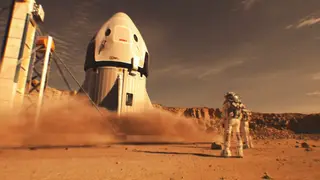
NASA has reopened astronaut recruitment for the first time since 2024, seeking candidates to support long-term lunar operations and future Mars missions. The application window closes on December 3, 2026, with final selections expected by late 2027. Selected individuals will help establish a permanent Moon Base and develop systems for deep space exploration.
NASA has reopened astronaut recruitment for the first time since 2024, inviting U.S. citizens to apply for roles supporting long-term lunar operations and future Mars missions. The application window closes on December 3, 2026, with final selections expected by late 2027. This recruitment drive is part of NASA’s broader Artemis program, aiming to establish a permanent Moon Base and develop systems for deep space exploration. The agency previously received over 8,000 applications in 2024, from which only 10 candidates were selected and are currently undergoing two years of training. This new cycle follows the recent MAX POWER expo and builds on earlier announcements made by NASA Administrator Jared Isaacman, who emphasized the historic significance of joining the astronaut corps during a pivotal era in space exploration.
Eligibility remains stringent: applicants must hold at least a master’s degree in a STEM field or have completed two years toward a doctoral program in engineering, biological science, or mathematics. Medical degree holders and graduates of nationally recognized test pilot schools (by July 2027) are also eligible. Professional experience requirements include 750 hours as pilot-in-command on high-performance jets, or equivalent flight time on fixed- or rotary-wing aircraft. The selection process is highly competitive—since NASA’s founding in 1958, only 370 individuals have been chosen despite thousands of applicants. The new cohort will be tasked with constructing and operating the Moon Base, conducting research, performing EVAs, and supporting spacecraft development.
What remains unresolved includes the specific mission profiles for the South Pole of the Moon, which NASA has identified as a key target area. Details on training timelines beyond 2027, crew assignments, and mission hardware are still pending. The broader implications of this recruitment—such as how it may influence international collaboration or commercial space ventures—are not yet detailed in the provided material.
The reopening of astronaut recruitment signals a renewed commitment to sustained human presence beyond low Earth orbit, potentially reshaping public engagement with space exploration and inspiring STEM education across the U.S. The selection of only 10 candidates from thousands in 2024 underscores the elite nature of the program, which may amplify its cultural significance as a symbol of national ambition. If this recruitment yields a diverse and technically skilled cohort, it could enhance NASA’s capacity to execute complex missions, possibly accelerating timelines for lunar habitation and Mars preparation. The focus on the Moon’s South Pole—a region with potential water ice—may also influence future resource utilization strategies and international space policy debates. Comparable to the Apollo-era recruitment drives of the 1960s, this initiative could serve as a generational catalyst for innovation in aerospace engineering, robotics, and life support systems. However, unlike past programs driven by Cold War competition, today’s efforts are increasingly shaped by public-private partnerships and long-term sustainability goals. The success of this recruitment may depend on how well NASA integrates new talent with emerging technologies like reusable launch vehicles and AI-assisted mission control. What to watch for includes whether the selected astronauts will be involved in commercial crew missions or international collaborations such as the Lunar Gateway, and how their training evolves with advances in virtual reality and remote operations.