Mayfield Blames Bears for Buccaneers' False Start Spree in Night Game
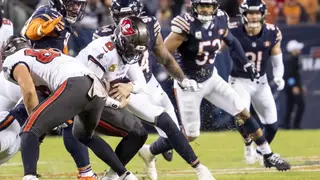
Tampa Bay Buccaneers quarterback Baker Mayfield claimed that the Chicago Bears used an illegal tactic by audibly mimicking the team's cadence during Sunday night’s game, leading to at least one false start. The Buccaneers were flagged five times for false starts, and Mayfield suggested the Bears’ actions disrupted their rhythm. The incident has sparked debate over defensive tactics in NFL games.
On November 9, 2026, during a Sunday night NFL game between the Tampa Bay Buccaneers and the Chicago Bears, quarterback Baker Mayfield claimed that the Bears used an illegal tactic by audibly mimicking the Buccaneers’ offensive cadence, contributing to at least one of the team’s five false start penalties. Mayfield specifically pointed to left tackle Tristan Wirfs jumping in response to the Bears’ vocal imitation of his cadence, which he said disrupted the offensive rhythm and led to a penalty call. The incident occurred during a particularly rough stretch for Tampa Bay’s offense: following the false start, Mayfield was sacked on the next play, and the Bucs suffered three consecutive sacks—though one was nullified by a defensive penalty. Mayfield emphasized that such actions are technically illegal under NFL rules but difficult for officials to detect due to their distance from the line of scrimmage. The situation has sparked debate over defensive tactics, particularly the use of audible distractions during huddles or pre-snap moments, and whether current officiating standards can effectively enforce these rules in real time.
The broader context involves longstanding concerns about competitive balance and rule enforcement in professional football. While the NFL prohibits defensive players from simulating offensive signals to induce false starts, enforcement has historically been inconsistent due to the difficulty of verifying such actions during live play. This incident echoes earlier controversies involving deceptive tactics, such as the 2019 "bark" controversy between the New Orleans Saints and Kansas City Chiefs, where similar allegations were raised but not formally penalized. The Buccaneers, seeking to maintain momentum in a tight NFC South race, now face scrutiny over whether they can adjust their offensive communication protocols. Meanwhile, the Bears’ defensive strategy—though unconfirmed—is being questioned as potentially crossing a gray line between psychological warfare and rule violation. What remains unresolved is whether the NFL will review this incident for potential rule clarification or enforcement changes, and how teams might adapt their pre-snap procedures to counter such tactics.
The incident could influence how teams approach offensive communication and defensive strategy in high-stakes games, particularly with increasing reliance on complex cadences and audible systems. If confirmed as a pattern, such tactics may prompt the NFL to reconsider whether officials should have greater authority or technological support—such as sideline audio monitoring—to detect simulated signals. This could affect player safety, as false starts often lead to rushed plays and increased risk of injury, especially when offensive linemen are caught off guard. The broader impact may extend to fan perception of fairness, with viewers potentially questioning the integrity of close games where subtle psychological tactics appear to sway outcomes. A comparable case is the 2015 "phantom penalty" controversy involving the New England Patriots, which led to rule changes on defensive pass interference. While this situation lacks official confirmation, it may prompt similar scrutiny if repeated. What to watch for next is whether the NFL reviews game footage or issues a statement, and how teams adjust their play-calling protocols in response to perceived psychological warfare.