SMS Authentication Revenue Declines as Telecoms Shift to Advanced Network APIs
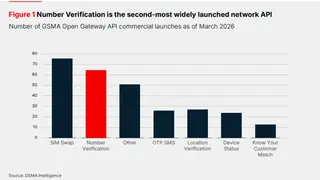
Global SMS one-time password traffic is projected to drop 41% by 2029, with enterprise spending falling from $17.6 billion to $9.6 billion. GSMA Intelligence highlights a growing opportunity in network-based authentication APIs, which could generate up to $14 billion in revenue by 2030. The shift is driven by rising adoption of passwordless login systems and competitive threats from messaging platforms like WhatsApp.
By 2029, global SMS one-time password (OTP) traffic is projected to fall by 41%, dropping from 1.43 trillion messages in 2024 to 838 billion, as enterprise spending on SMS authentication declines from $17.6 billion to $9.6 billion. This shift is driven by the growing adoption of passwordless login systems and competition from messaging platforms like WhatsApp, which are increasingly used for customer verification. GSMA Intelligence’s November 2026 report identifies a significant opportunity in network-based authentication APIs—particularly Phone Number Verification, SIM Swap detection, and Number Recycling—which could generate up to $14 billion in revenue by 2030. The GSMA Open Gateway initiative has already expanded to over 300 mobile networks across 65 markets, with 64 commercial deployments of the Number Verification API by March 2026. Vodafone launched Version 2 in Germany, the Netherlands, and the UK in July 2026, while U.S. carriers AT&T, T-Mobile, and Verizon adopted it via Aduna. In Indonesia, Telin processed over one million verification transactions by May 2026. Google Firebase’s Phone Number Verification service now offers lower pricing than SMS OTP in six of seven countries surveyed in July 2026, with prices as low as $0.03 in Spain versus $0.04 for SMS. The technology enables enterprises to verify a number’s authenticity without sending messages, supporting digital banking and fraud prevention. However, telecom operators face high upfront costs—$1 million to $2 million per development cycle—to upgrade legacy systems, though cloud-based alternatives like those from NetLync and U2opia are emerging.
The decline of SMS OTP could reshape digital trust infrastructure, particularly in financial services and e-commerce where secure identity verification is critical. As mobile operators pivot toward network APIs, users may benefit from faster, more seamless authentication—especially with passwordless systems—but risks remain around data privacy and centralized control over identity verification. The shift mirrors earlier transitions such as the decline of SMS for marketing due to spam and regulatory pressure, which led to the rise of opt-in messaging platforms. Now, similar dynamics are unfolding in authentication: incumbent SMS models face disruption from tech giants like Google, whose Firebase service offers a cheaper, scalable alternative. This could widen the gap between large telecoms with API infrastructure and smaller operators unable to invest. The broader impact may include increased data consolidation by cloud providers and platform companies, potentially reducing operator independence. What remains uncertain is whether network APIs will achieve widespread adoption outside early-adopter markets, or if regulatory frameworks will emerge to govern their use. The next few years will likely determine whether telecoms can capture value from digital identity—or cede it to tech platforms.