Greek Coast Guard Recovers 21 Dead Migrants After Failed Crossing Near Crete
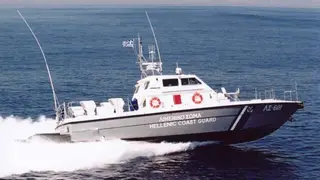
The Greek Coast Guard recovered 21 bodies from the sea south of Crete after a migrant boat capsized during an attempted crossing to Greece. Survivors reported leaving Libya on November 3 or 4, paying between 1,668 and 2,225 euros per person. Authorities arrested two Sudanese nationals on charges including illegal entry, facilitation of migration, criminal organization, and endangerment resulting in death, while additional bodies were found in separate locations nearby.
On November 6, 2026, a migrant boat capsized in the sea south of Kaloi Limenes, a port village in Crete’s Heraklion regional unit, resulting in the recovery of 21 bodies by the Greek Coast Guard. The vessel, carrying migrants from Libya, was reported to have departed on November 3 or 4; survivors paid between €1,668 and €2,225 per person, equivalent to 12,000–16,000 Libyan dinars. A rescue operation began overnight from Saturday to Sunday, with the tugboat Pyrros recovering 28 survivors and one body, while severe gale-force winds (Beaufort scale 6–7) prevented further recovery efforts. Additional bodies were later found 10 nautical miles west-southwest of Kaloi Limenes, and a separate incident revealed 13 dead on a small boat 15 nautical miles off the same location. Frontex deployed an unmanned aerial vehicle to locate two additional groups—40 and 100 migrants—31 and 47 nautical miles southeast of Kaloi Limenes, respectively. Two Sudanese nationals, aged 28 and 16, were arrested in connection with the incident on charges including illegal entry, facilitation of migration, criminal organization, and endangerment resulting in death. The Port of Heraklion is leading the preliminary investigation.
This tragedy reflects broader patterns in Mediterranean migration, particularly from Libya to Greece via Crete, which has seen a notable rise in arrivals. In 2025, UNHCR recorded 41,695 sea arrivals and 7,075 land arrivals in Greece, with 107 reported dead or missing. Greece has responded with stricter migration policies, including support for EU proposals on “return hubs” and offshore detention centers. Human rights organizations have criticized these measures, citing recent actions such as the issuance of a European arrest warrant for an NGO founder and charges against a Norwegian national for supporting migrant rights. The legal and humanitarian implications remain unresolved, particularly regarding accountability for smugglers and the fate of those still unaccounted for.
The loss of 21 lives near Crete underscores the persistent dangers of Mediterranean crossings, especially when weather conditions and overcrowded vessels combine with inadequate rescue coordination. These deaths may amplify pressure on EU migration policy, potentially influencing debates over Frontex’s expanded role in surveillance and intervention. The arrest of two Sudanese nationals highlights efforts to hold smugglers accountable, but the effectiveness of such prosecutions remains uncertain amid systemic challenges in cross-border legal cooperation. This incident could further strain relations between Greece and human rights groups, which have already voiced concern over recent crackdowns on NGOs. Comparable cases, such as the 2015 Mediterranean migrant crisis, show how high-profile tragedies can trigger temporary policy shifts followed by long-term stagnation. Moving forward, increased monitoring of maritime routes and potential humanitarian interventions may be needed—though any action will likely depend on political will within the EU, which remains divided on migration reform.