Ukraine Advances Anti-Money Laundering Law to Join EU Payment System
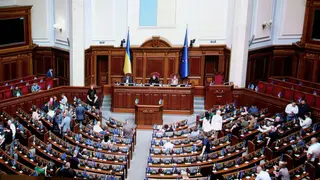
Ukraine's parliament approved a key anti-money laundering bill on November 10, 2026, advancing the country’s bid to join the Single Euro Payments Area. The legislation will establish a central register of bank accounts and safe-deposit boxes, enabling law enforcement agencies to locate financial assets more efficiently. The move is critical for meeting EU standards ahead of a December deadline set by the European Payments Council.
On November 10, 2026, Ukraine’s parliament, the Verkhovna Rada, approved Bill No. 14327-d in its first reading, a pivotal anti-money laundering measure aimed at enabling Ukraine’s integration into the Single Euro Payments Area (SEPA). The legislation mandates the creation of a central register tracking bank accounts and safe-deposit boxes across the country, though it will not disclose account balances, transaction histories, or contents. With 249 MPs voting in favor, the bill now moves toward a second reading and presidential signature before it can take effect. The European Payments Council has set a December deadline for Ukraine’s formal approval to join SEPA, a critical milestone for aligning with EU financial standards. The law is designed to meet new EU anti-money laundering directives expected to take effect in mid-2027. Lawmaker Olha Vasylevska-Smahliuk, one of the bill’s co-authors, emphasized urgency, noting that delays could jeopardize Ukraine’s SEPA application despite the progress made.
The push for this reform stems from broader EU integration goals, particularly financial system harmonization during wartime. While Brussels demands broad access to the register for law enforcement agencies combating corruption and organized crime, some Ukrainian MPs remain wary—especially of granting access to agencies like the Security Service (SBU) and State Bureau of Investigation (SBI), due to concerns over abuse of power. To balance security and privacy, lawmakers have agreed to initially restrict access to three specialized bodies: the Bureau of Economic Security, the National Agency for the Prevention of Corruption (NACP), and the Asset Recovery and Management Agency (ARMA). This model mirrors practices in Germany and Liechtenstein. Still, skepticism persists about whether the bill will pass its second reading in time, with experts like Oksana Ihnatenko from the Center for Financial Integrity warning that legislative delays—seen previously with virtual asset regulations—could push adoption into 2027.
If enacted by December 2026, Ukraine’s entry into SEPA could significantly reduce cross-border transaction costs, potentially saving Ukrainians up to $220 million annually in bank fees. This would benefit businesses and individuals alike, especially those engaged in international trade or remittances. The move may also strengthen investor confidence in Ukraine’s financial system, signaling progress on institutional reforms despite ongoing war. However, the limited access to the register raises concerns about transparency and oversight, particularly if law enforcement agencies with questionable track records gain access to sensitive data. The compromise model—restricting access to three agencies—could serve as a template for balancing security needs with civil liberties, but its long-term effectiveness remains uncertain. Comparable cases include Estonia’s early adoption of digital financial systems during EU accession, which helped build trust and efficiency. Ukraine may follow a similar path if reforms are implemented consistently. What to watch for includes the outcome of the second parliamentary reading, the European Commission’s assessment, and how civil society monitors enforcement. The success of this law could influence broader EU integration efforts in Eastern Europe, but only if transparency and accountability mechanisms are robustly maintained.