Sufjan Stevens Releases Eccentric Holiday Compilation Featuring One New Song
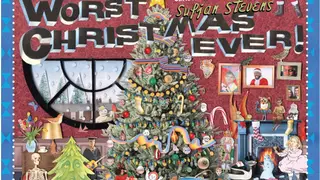
Sufjan Stevens has released 'Worst Christmas Ever!', a compilation album drawing from his previous holiday recordings across ten volumes, plus one new track titled 'This Christmas (It Only Gets Better)'. The album continues his tradition of creating warm, heartfelt Christmas music focused on communal joy rather than melancholy or nostalgia. It marks a nostalgic yet fresh take on his long-running seasonal project.
Sufjan Stevens released *Worst Christmas Ever!* on November 11, 2026, a compilation drawing from his ten-volume holiday series—originally distributed between 2001 and 2012—and featuring one new track, “This Christmas (It Only Gets Better).” The album, issued under Asthmatic Kitty Records, compiles material from his long-running seasonal project that began as private gifts to friends and family in 2001. Though the collection includes nearly five hours of existing music, it marks a curated re-release rather than a new artistic statement, with only one original song added. The compilation’s eccentric choices—such as a “We Will Rock You”-beat version of “Holly Jolly Christmas” and an 8-bit rendition of “It Came Upon a Midnight Clear”—reflect Stevens’ playful, self-aware approach to holiday music, even if some selections feel more gimmicky than heartfelt. These decisions are contextualized by Stevens’ recent personal struggles: the death of his longtime partner Evans Richardson in April 2023 and a diagnosis of Guillain-Barré Syndrome that same August, followed by his first live performance in eight years in September 2026. The new song functions as both personal reckoning and communal invitation, with lyrics acknowledging misanthropy while offering hope: “Don’t put it past the Earth / To get better in the end.”
The people involved include Stevens himself, who seeks to reframe his seasonal legacy through curated nostalgia; Asthmatic Kitty Records, which continues to support his artistic output; and collaborators like Richard Reed Parry and Aaron Dessner, whose contributions helped shape the communal warmth of earlier recordings. The broader cultural context includes a long-standing tradition of Christmas music as either emotionally cathartic or nostalgically comforting, with Stevens occupying a niche that emphasizes collective joy over individual melancholy. What remains unresolved is whether this compilation signals a full artistic return or a transitional gesture—though the emotional weight of the new song suggests deeper intentions. It is not yet known if Stevens plans further holiday releases or how audiences will receive the mix of nostalgia and novelty.
The release of *Worst Christmas Ever!* could deepen public engagement with seasonal music as a form of emotional resilience, particularly in times of personal or collective hardship. By blending archival material with a vulnerable new song, Stevens may inspire listeners to revisit past traditions not for sentimentality alone, but as acts of communal healing. The album’s eclectic mix—ranging from playful reinterpretations to deeply introspective lyrics—may resonate with audiences seeking authenticity amid the commercialized holiday season. Comparable to the enduring popularity of Bing Crosby’s classic Christmas albums, Stevens’ work could become a modern touchstone for those who value sincerity over spectacle. Its impact may ripple into music streaming platforms and retail spaces, where curated holiday playlists and physical releases often see spikes in sales during late autumn. However, whether this compilation will influence broader cultural trends in seasonal music remains uncertain; its success may depend on how well it balances novelty with emotional coherence. What to watch for next is Stevens’ continued public presence—especially if he follows up with more new material or live performances—potentially signaling a sustained artistic reemergence rather than a one-off project.