Player Transforms GTA 5 Into a Full Train Simulation Experience
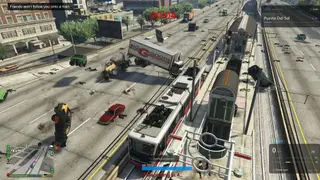
A modder has completely reimagined Grand Theft Auto 5 by replacing all criminal activities with train-based gameplay, turning the open-world environment into a functional rail simulation. The project demonstrates the game’s moddability and creative potential beyond its original design.
A modder has reimagined Grand Theft Auto 5 by replacing its core criminal mechanics with a fully functional train simulation, transforming the game’s open world into a detailed rail transport environment. This project, highlighted in a PC Gamer article titled “I have converted GTA 5 from crime sim to train sim,” demonstrates the game’s deep moddability and the creative potential of user-generated content. While specific details such as the modder’s name, release date, or exact scope of simulation features (e.g., signal systems, timetable accuracy, or locomotive variety) are not provided in the source, the transformation is described as comprehensive—replacing all criminal activities with train-based gameplay across the entire map. The original game, developed by Rockstar North and released in 2013, was designed around urban crime, heists, and player freedom within a fictionalized Los Angeles (Los Santos). Its underlying engine and open-world architecture have long supported extensive modding, which has previously enabled everything from realistic weather systems to full vehicle overhauls. This latest mod represents an extreme pivot in genre, leveraging the game’s existing infrastructure for entirely new purposes.
The modder’s motivation appears rooted in creative expression and technical demonstration rather than commercial gain, as no official entity is involved beyond the broader PC Gamer community that reported on the project. Rockstar Games has not commented on the mod, nor has it taken action to restrict such modifications—consistent with its longstanding policy of allowing fan-created content, provided it does not violate terms of service. The broader gaming community, particularly fans of simulation games like Train Simulator or Open Rails, may find this mod appealing as a novel way to experience rail transport in a familiar, expansive world. What remains unknown is whether the mod includes multiplayer functionality, how it handles physics and realism, or if it will be released publicly. Whether Rockstar or other developers might take note of such transformative mods for future game design remains speculative.
This mod could signal a growing cultural shift where players increasingly use established games as platforms for creative reinterpretation rather than passive entertainment. By repurposing a crime-focused title into a rail simulation, the modder exemplifies how open-world engines can become digital canvases for niche interests, potentially influencing how developers approach game design and mod support. The broader impact may extend to educational uses—such as training in urban transit systems—or inspire new forms of collaborative storytelling within gaming communities. A comparable precedent is the “Minecraft” phenomenon, where users built complex cities, historical recreations, and even functional computers, demonstrating how sandbox environments can evolve beyond their original intent. In this case, GTA 5’s transformation may not disrupt the market but could encourage developers to build more mod-friendly systems or explore hybrid genres. What to watch for next is whether similar mods emerge in other major titles, or if publishers begin to formally recognize and integrate such community innovations into official content—possibly through curated mod hubs or developer partnerships.