CMS Finalizes 2027 Medicare Physician Fee Schedule with Focus on Primary Care Reform and Value-Based Models
The Centers for Medicare & Medicaid Services (CMS) released the final rule for the CY 2027 Medicare Physician Fee Schedule, confirming changes that aim to modernize physician payment systems. The rule emphasizes value-based care, strengthens incentives for accountable care organizations, and signals future reforms in primary care reimbursement, including prospective payment models and integration of digital health tools. CMS will consider public feedback on reimagining primary care delivery within Original Medicare in upcoming policy development.
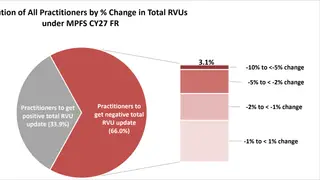
On November 4, 2026, CMS released the final rule for the CY 2027 Medicare Physician Fee Schedule (PFS), confirming a series of policy changes aimed at modernizing physician payment systems and advancing value-based care. Key elements include replacing the flat-dollar payment for code G2211 with a percentage-based modifier that doubles the payment adjustment for complex visits within accountable care organizations (ACOs)—32% versus 16%—and finalizing broader reforms to the Medicare Shared Savings Program (MSSP), including incentives for two-sided risk participation and beneficiary assignment refinements. CMS also finalized provisions allowing approved ACOs to reduce or eliminate Part B cost sharing for eligible beneficiaries starting April 1, 2027, though DMEPOS items remain excluded due to fraud risk. The agency is sunsetting the long-standing Merit-based Incentive Payment System (MIPS) in favor of specialty-specific MIPS Value Pathways (MVPs), with three new MVPs introduced for diabetes, hypertension, and hospital-based care. Despite a statutory 0.75% update for APM participants, the overall conversion factor is expected to decline by 0.12% due to budget neutrality adjustments and the expiration of a one-time 2.5% increase from CY 2026.
This move builds on prior CMS initiatives, including the introduction of care management codes and E/M RVU changes that MedPAC has noted increased primary care revenue. The agency is now signaling a long-term shift toward reimagining primary care delivery through prospective payment models and digital health integration, though no immediate changes are made in CY 2027. Stakeholders, including Health Management Associates (HMA), interpret this as evidence that CMS intends to drive systemic change beyond incremental updates. The push for ACOs and value-based models reflects a broader administrative strategy to reduce reactive care and promote preventive medicine. However, the financial burden on non-ACO providers remains unresolved, and questions persist about how prospective payment will be implemented. CMS has not yet announced specific timelines for future rulemaking on primary care reform, though it plans to analyze public comments received during its RFI process.
The CY 2027 PFS changes could significantly reshape how physicians deliver care under Medicare, particularly by incentivizing long-term, coordinated models through ACOs and MVPs. Primary care providers may face pressure to align with value-based systems to maintain revenue, while those outside such arrangements risk financial strain due to declining conversion factors. The shift away from MIPS toward specialty-specific pathways may reduce administrative burden for physicians but could also deepen disparities if smaller practices lack resources to meet new reporting standards. DMEPOS cost-sharing waivers may improve access for Medicare beneficiaries in ACOs, potentially increasing patient satisfaction and retention—but could also raise scrutiny over fraud prevention. Comparable to the 2015 transition from fee-for-service to bundled payments under the Hospital Value-Based Purchasing Program, this move represents a structural pivot toward accountability. What remains uncertain is whether CMS will follow through on its stated intent to overhaul primary care payment—especially given the lack of immediate action. The next phase will likely involve public consultations and pilot programs, which could determine how widely these reforms scale across the healthcare system.