New Regency Files Lawsuit to Maintain 'Heat' Rights Amid Director's Reclamation Attempt
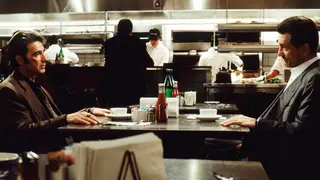
New Regency has sued director Michael Mann to assert ownership of the screenplay for the 1995 film 'Heat,' challenging his attempt to reclaim rights under copyright law after 40 years. The lawsuit claims the screenplay was a work made for hire, invalidating Mann’s termination notices. This legal dispute arises ahead of Mann's planned sequel, 'Heat 2,' based on his 2022 novel and starring Al Pacino, Robert De Niro, and Val Kilmer.
New Regency has filed a federal lawsuit in California against director Michael Mann, seeking to block his attempt to reclaim copyright ownership of the 1995 film Heat after 40 years. The dispute centers on Mann’s three termination notices served earlier this year, which invoked a provision in U.S. copyright law allowing creators to reclaim rights to works they previously assigned after a certain time—specifically, 35 or 40 years post-assignment. New Regency argues that the screenplay was a “work made for hire,” meaning Mann was not the legal author and thus ineligible to terminate rights. The company claims the assignment occurred through an alleged 1988 oral agreement involving Mann and two entities he controlled, though no written contract has been produced. This legal battle arises just ahead of the production of Heat 2, a sequel based on Mann’s 2022 novel and starring Al Pacino, Robert De Niro, and Val Kilmer—whose role is posthumously honored in the film. New Regency asserts that Mann’s termination notices jeopardize its ability to develop, finance, and license derivative works, including Heat 2, which has already secured distribution deals with Amazon contingent on clear ownership. Mann’s legal team counters that he wrote the screenplay as an independent author, emphasizing his original creative work from the 1980s that evolved into the iconic film. The outcome may hinge on whether courts accept the oral agreement and whether Mann’s status as a creator or employee is legally defined.
This case could significantly influence how creators and studios negotiate intellectual property rights in long-term film projects, particularly when sequels or reboots are planned decades later. If New Regency prevails, it may reinforce the power of production companies to retain control over classic works, potentially discouraging future creators from pursuing termination rights due to perceived legal hurdles. Conversely, a ruling in Mann’s favor could embolden filmmakers to reclaim ownership after long periods, reshaping how studios structure initial agreements. A comparable precedent is the 2015 dispute over *The Godfather Part II*, where Francis Ford Coppola successfully reclaimed rights under similar provisions, setting a precedent for authorial reclamation. The outcome may also affect streaming platforms like Amazon, which are investing heavily in legacy properties—such as Heat 2—relying on clear title to secure licensing and distribution. What remains uncertain is whether the court will consider the lack of written documentation a fatal flaw or allow oral agreements to stand under specific circumstances. The case could set a broader legal tone for how copyright law balances creator rights with corporate ownership in entertainment, especially as more franchises approach their 40-year reclamation window.