October 2026 Sets Global Temperature Record, with 2027 Expected to Be Warmest Year Yet
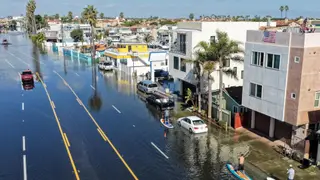
October 2026 was the warmest October on record since 1850, according to NOAA, NASA, and the European Copernicus Climate Change Service. The year is projected to be the second-warmest on record, with a strong El Niño event increasing the likelihood that 2027 will surpass 2024 as the hottest year ever. Ocean surface temperatures reached their fifth consecutive monthly record high.
October 2026 marked the warmest October on record since global temperature monitoring began in 1850, according to NOAA, NASA, and the European Copernicus Climate Change Service. The global average temperature for January–October 2026 ranked second-highest on record, trailing only 2024, while ocean surface temperatures reached their fifth consecutive monthly record high—surpassing even the previous month’s anomaly by exceeding 3°C above average in October. This unprecedented warmth was driven by a rapidly intensifying "super El Niño" event, with sea surface temperatures in the Niño 3.4 region reaching +2.5°C above average during August–October, surpassing the threshold for a super El Niño (2.0°C). The event is projected to peak in December 2026 and persist through early 2027, with NOAA’s Climate Prediction Center assigning a 100% chance of El Niño conditions continuing into March 2027. Scientists including Zeke Hausfather and climatologists such as Brian Brettschneider and Maximiliano Herrera have highlighted the significance of these trends, noting that 2026 is likely to be the second-warmest year globally and that 2027 may surpass even 2024 as the hottest year on record. In the contiguous United States, January–October 2026 was the warmest such period in history, with 95.25% of the country experiencing above-average temperatures and 41.9% recording record warmth. Meanwhile, Arctic sea ice extent ranked 12th-lowest on record for October, while Antarctic sea ice hit its second-lowest level ever, both regions registering their second-warmest Octobers.
The background to this extreme heat includes the long-term trajectory of global warming due to greenhouse gas emissions, compounded by the natural amplification from a strong El Niño. The current event is being compared to the 1997 super El Niño, though it has already surpassed that year’s ONI value in the August–October period. Organizations like NOAA and Copernicus are tracking these changes for climate modeling and public forecasting, while scientists emphasize the role of ocean-atmosphere heat transfer in driving record temperatures. The implications extend beyond weather records: with El Niño expected to persist into 2027, extreme weather events such as hurricanes, droughts, and floods may intensify across vulnerable regions, particularly along the U.S. Gulf and East Coasts. What remains unresolved is whether the transition from El Niño to La Niña in late 2027 will be strong or weak, which could influence global temperature trends into 2028. The full impact of these conditions on agriculture, energy demand, and public health systems is still unfolding.
The record-breaking heat of October 2026 and the ongoing super El Niño event could significantly disrupt seasonal planning across sectors reliant on climate predictability. Agriculture may face heightened risks from extreme weather patterns, with crop yields potentially affected by unseasonal temperatures and shifting precipitation cycles—particularly in regions like the U.S. Gulf Coast, where El Niño typically brings wetter conditions but also increased storm intensity. Energy markets may experience volatility as demand for cooling surges during heatwaves, while infrastructure systems designed for historical climate norms could face strain from prolonged high temperatures. Insurance companies may see rising claims related to weather-related damage, potentially leading to higher premiums or reduced coverage in vulnerable areas. A comparable precedent is the 1997–98 super El Niño, which triggered widespread droughts, floods, and economic disruptions globally, including major impacts on fisheries and food prices. While current projections suggest a shift toward neutral conditions by mid-2027, the possibility of a strong La Niña in late 2027 could introduce further instability. What to watch for includes how rapidly climate adaptation policies are scaled up in response, particularly in coastal communities and regions with aging infrastructure. The scientific community may also intensify calls for emissions reductions as these events underscore the accelerating pace of climate change.