The Nature Conservancy Launches Reforestation Hub to Identify Climate-Friendly Tree Planting Sites
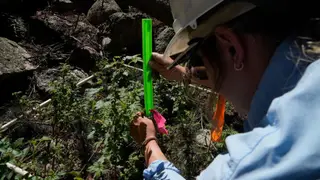
The Nature Conservancy has developed the Reforestation Hub, a free online tool that uses interactive maps to identify suitable land across the U.S. for tree planting. The tool estimates carbon sequestration potential and helps prioritize areas like unused pastures and riverbanks where reforestation can support climate goals without disrupting agriculture or urban development.
The Nature Conservancy has launched the Reforestation Hub, a free online tool designed to identify climate-friendly locations for tree planting across the United States. The platform uses interactive maps to highlight areas such as unused pastures, riverbanks, flood-prone fields, and underutilized lawns where reforestation could occur without disrupting agriculture or urban development. It estimates how many acres are suitable for planting and calculates the potential annual carbon dioxide sequestration in each location. This initiative responds to the historical loss of forest cover: before European settlement, forests once covered about a billion acres across the continental U.S., but widespread clearing for farming and urban expansion drastically reduced that figure. Jason Milks of The Nature Conservancy emphasizes that restoring forests in historically forested regions is one of the most effective methods for removing carbon from the atmosphere. While not all land can be reforested—due to ongoing needs for farmland and cities—the tool helps prioritize sites where ecological benefits can be maximized without compromising essential human uses.
The organization behind the project, The Nature Conservancy, aims to support climate mitigation goals by enabling targeted, science-based reforestation efforts. The tool is intended for use by landowners, conservation groups, local governments, and researchers who seek to contribute to carbon reduction strategies. It does not mandate action but provides data-driven guidance to inform decisions. What remains unresolved is how widely the tool will be adopted, whether it will influence policy or private investment in reforestation, and how accurately its estimates reflect long-term ecological outcomes. The success of the initiative may depend on follow-up efforts to translate map data into actual planting projects and monitoring systems.
The Reforestation Hub could empower local actors across the U.S. to participate in climate solutions by identifying low-conflict reforestation opportunities, potentially increasing grassroots engagement in carbon sequestration. Landowners, municipalities, and conservation nonprofits may use the tool to prioritize projects that align with both environmental and economic goals, possibly attracting funding from green bonds or carbon credit markets. This approach mirrors earlier efforts like the U.S. Forest Service’s urban forestry programs, which similarly sought to expand tree cover in underutilized spaces without displacing existing land uses. However, unlike those programs, this tool is publicly accessible and data-driven, potentially scaling impact more rapidly. Still, its real-world influence depends on outreach, trust-building, and integration with existing land-use planning frameworks. What to watch for next is whether state or federal agencies adopt the tool into official climate action plans, and how private-sector entities might use it to meet net-zero commitments—though such outcomes remain speculative.