COP31 Warns of $840 Billion Climate Finance Shortfall, New $10 Billion Initiative Launched
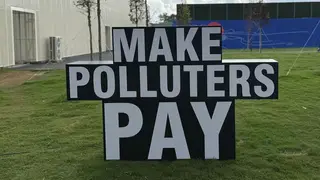
At the COP31 climate summit in Antalya, Türkiye, a new assessment revealed that global climate finance for developing countries could fall $840 billion short of the $1.3 trillion annual target by 2035. United Nations Secretary-General António Guterres emphasized that even tripling adaptation funding would cover less than 30% of needs. In response, development finance institutions from the UK, Norway, and Canada announced a joint initiative to mobilize $10 billion in climate investments across emerging markets by 2030.
At the COP31 climate summit in Antalya, Türkiye, on November 14, 2026, a new assessment revealed that global climate finance for developing countries could fall $840 billion short of the $1.3 trillion annual target by 2035, leaving projected annual funding at around $460 billion. This shortfall underscores the gap between current commitments and the scale of investment needed for renewable energy, climate adaptation, and resilient infrastructure in vulnerable nations. United Nations Secretary-General António Guterres emphasized that even tripling current adaptation finance would cover less than 30% of required needs, highlighting a critical mismatch in funding priorities. In response, development finance institutions from the UK, Norway, and Canada announced a joint initiative to mobilize $10 billion in climate investments across emerging markets by 2030—though this amount represents only about 0.77% of the broader annual target. The initiative aims to leverage public capital to attract private investment, particularly in regions facing high borrowing costs and debt stress. Guterres also called for reforms to multilateral development banks, noting that every dollar in additional capital could generate $8–$10 in financing through financial guarantees and expanded lending capacity. Meanwhile, agriculture receives only 5% of climate-related development finance, despite its importance to food security and rural livelihoods in developing countries. Unresolved issues include how to measure progress on tripling adaptation finance, the role of private capital versus public commitments, and the structure of loss-and-damage financing.
The $840 billion shortfall and the modest $10 billion initiative may signal a growing recognition of systemic gaps in climate finance, particularly for nations most vulnerable to climate impacts. While the UK, Norway, and Canada’s joint effort could catalyze private investment in emerging markets, its limited scale suggests it is unlikely to close the overall funding gap without broader institutional reforms. The emphasis on development bank capital multiplication—potentially amplifying funds by 8–10 times—could reshape how international finance institutions operate, but success depends on political will and structural changes that have yet to materialize. Comparable to past efforts like the Green Climate Fund’s early struggles with slow disbursement and complex procedures, this moment may test whether new mechanisms can overcome bureaucratic inertia. The underfunding of agriculture and adaptation reflects deeper inequities in how climate finance is allocated, potentially exacerbating food insecurity and economic instability in rural communities. Moving forward, the effectiveness of COP31’s outcomes may hinge on whether developed nations commit to binding financial pledges and whether multilateral institutions adopt more flexible, accessible models—especially as climate disasters increase in frequency and intensity.