Veteran Actor Skip Hinnant, Known for 'The Electric Company' and 'Fritz the Cat,' Dies at 86
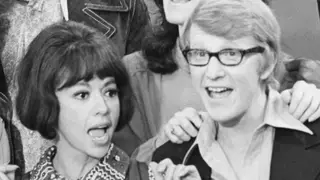
Skip Hinnant, a pioneering cast member of the Emmy-winning educational series 'The Electric Company,' has died at age 86 in Denver, Colorado. He was best known for portraying characters like Fargo North and Decoder, and also lent his voice to the title role in the 1972 film 'Fritz the Cat.' His career spanned decades, including roles on 'Sesame Street,' 'The Patty Duke Show,' and stage performances such as originating Schroeder in 'You're a Good Man, Charlie Brown.'
Veteran actor Skip Hinnant died at age 86 on November 8, 2026, in Denver, Colorado, surrounded by family; a cause of death was not disclosed. He was a foundational cast member of PBS’s Emmy-winning educational series *The Electric Company*, which aired from 1971 to 1977 and spanned six seasons with 780 episodes. Hinnant portrayed several memorable characters, including the word-deciphering detective Fargo North and Decoder, as well as Frankenstein’s monster in recurring sketches alongside Jim Boyd’s Werewolf and Morgan Freeman’s Dracula. He also played J.J., Supper Man, and a boy in the satirical sketch “Love of Chair,” parodying the soap opera *Love of Life*. His early television work included a recurring role as Ted on *The Patty Duke Show*, and he later appeared on *Sesame Street*, *3-2-1 Contact*, *Kate & Allie*, and *As the World Turns*. His voice acting career included the title role in the 1972 adult animated film *Fritz the Cat* and its 1974 sequel, as well as voicing the Easter Bunny in the 1977 Rankin/Bass special and Pogo Possum in the 1980 film *I Go Pogo*. On stage, he originated the role of Schroeder in the 1967 Off-Broadway production of *You’re a Good Man, Charlie Brown*.
Hinnant’s career reflected a broader cultural shift in children’s media during the 1970s, where educational programming merged with entertainment through comedy and animation. His work on *The Electric Company* was part of a deliberate effort by PBS to use innovative formats—such as sketch comedy and animated segments—to teach literacy, a model that influenced later shows like *Sesame Street*. The series’ success demonstrated the viability of combining humor and music with learning, a strategy now standard in children’s media. Key figures involved included producers at PBS, animators from the studio behind the show’s visuals, and fellow cast members like Morgan Freeman and Rita Moreno, whose early careers were similarly shaped by such groundbreaking work. What remains unresolved is whether Hinnant had any post-2000 public appearances or uncredited roles, as his later years are not detailed in available records.
Hinnant’s passing marks the loss of a key figure in the evolution of educational television, particularly in how media can simultaneously entertain and instruct. His work on *The Electric Company* helped establish a blueprint for children’s programming that prioritized engagement through humor and character-driven storytelling—principles now embedded in streaming platforms’ children’s content. The show’s legacy may influence current efforts by Netflix, Disney+, and Apple TV+ to develop educational series with strong narrative arcs and diverse casting. His voice work on *Fritz the Cat*, a landmark in adult animation, also underscores the cultural significance of early animated films that pushed boundaries in storytelling and audience targeting. While not as widely recognized today as some contemporaries, Hinnant’s contributions helped shape the genre’s development. The impact may be felt most strongly among educators and media historians studying the intersection of pedagogy and pop culture. What to watch for next is whether streaming platforms will revisit or repackage classic educational content like *The Electric Company* in curated collections, potentially introducing it to new generations.