Unions Challenge Schumer's Senate Leadership; Rockstar Workers Vote on Unionization Before GTA VI Launch; New Jersey Educators Face Federal Probe
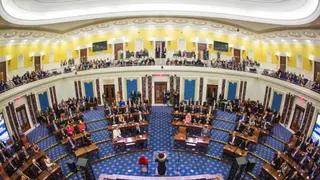
Labor groups have formally opposed Senator Chuck Schumer’s bid to retain the Senate Majority Leader position, citing concerns over labor policy. Meanwhile, employees at Rockstar Games are voting on union representation ahead of the highly anticipated release of Grand Theft Auto VI. The New Jersey Education Association is also under federal investigation for potential violations in its operations.
Labor groups have formally challenged Senator Chuck Schumer’s re-election as Senate Majority Leader, expressing concerns about his approach to labor policy. The opposition comes amid heightened scrutiny of legislative priorities related to workers’ rights, collective bargaining, and wage standards. While no specific details on the nature of the policy disagreements are provided, the move signals growing internal pressure within progressive circles over how labor interests are represented at the highest levels of federal governance. Simultaneously, employees at Rockstar Games are engaged in a unionization vote ahead of the highly anticipated release of Grand Theft Auto VI, marking a significant moment for labor organizing in the video game industry—a sector historically resistant to unionization. The outcome of this vote could set a precedent for worker representation in tech and entertainment sectors. Separately, the New Jersey Education Association is under federal investigation for potential operational violations, though the nature of these alleged breaches remains unspecified. The probe may impact public trust in education leadership and could influence future state-level labor practices within school systems.
The background reveals increasing momentum behind labor advocacy across diverse industries. Unionization efforts in tech and creative fields have gained traction in recent years, with workers seeking better pay, transparency, and job security. The Rockstar Games vote reflects this broader trend, as employees aim to formalize their voice ahead of a major product launch. Meanwhile, Senator Schumer’s leadership role has long been central to Democratic legislative strategy, making the challenge from within his party notable. The New Jersey probe adds another layer, suggesting possible mismanagement or financial irregularities that could affect public education funding and policy. What remains unresolved is whether the Senate leadership challenge will gain traction, how the Rockstar Games vote will conclude, and what findings will emerge from the federal investigation.
The unionization push at Rockstar Games could signal a broader shift in labor dynamics within high-profile creative industries, where worker autonomy has traditionally been limited. If successful, it may inspire similar efforts in other tech and entertainment firms, potentially reshaping workplace norms. The Senate leadership challenge underscores growing internal tensions over how labor interests are prioritized in national policy—especially as economic inequality remains a pressing concern. A comparable earlier case is the 2018 unionization drive at Amazon warehouses, which drew national attention and prompted broader discussions about gig economy labor rights. The New Jersey Education Association’s federal probe may also influence how public-sector unions operate, particularly regarding financial accountability. What could follow includes increased scrutiny of education funding transparency, potential reforms in collective bargaining rules, or shifts in voter trust. Monitoring the Rockstar Games vote outcome and the Senate leadership dispute will be key to understanding whether labor movements are gaining institutional leverage across both private and public sectors.