Barbados Prime Minister Mia Mottley Calls for Global Petition to Cut Methane Emissions Ahead of Cop31
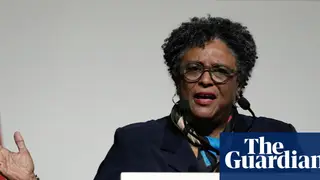
Barbados Prime Minister Mia Mottley has launched a global petition urging citizens to demand urgent action on methane emissions at the Cop31 climate summit in Antalya, Turkey. She emphasized that reducing methane could slow global warming by 0.3°C to 0.5°C, buying critical time for decarbonization efforts. Mottley called on ordinary people to confront political inaction, framing silence on climate change as a 'cancer of indifference'.
At the Cop31 UN climate summit in Antalya, Turkey, Barbados Prime Minister Mia Mottley launched a global petition calling for urgent reductions in methane emissions, aiming to collect 1.5 billion signatures—a symbolic echo of the 1.5°C temperature target. She emphasized that cutting methane could slow global warming by 0.3°C to 0.5°C, providing critical time for decarbonization efforts. Methane, which is 80 times more potent than carbon dioxide over a 20-year period, originates from oil and gas extraction, coalmines, landfills, and livestock farming. Mottley framed political inaction on climate change as a “cancer of indifference,” urging ordinary citizens to confront leaders who fail to act despite repeated pledges. Her call follows years of advocacy, including her 2021 speech at Cop26 where she challenged wealthy nations over climate justice and reparations for historical harm. The petition is not intended to replace national policies but to demonstrate public demand for stronger action. While no binding international treaty on methane will be signed at Cop31, the summit’s draft text may include commitments such as achieving 35% global electricity use by 2035 and acknowledging that the world will likely exceed the 1.5°C threshold. Experts like Durwood Zaelke of the Institute for Governance and Sustainable Development argue that voluntary measures are insufficient and that only a binding agreement can deliver meaningful results.
Mottley’s petition could amplify public pressure on governments and corporations to prioritize near-term climate interventions, particularly in methane reduction, which offers faster cooling effects than carbon dioxide cuts. If successful, the campaign may shift political discourse toward accountability, especially for fossil fuel companies and financial institutions that profit from high-emission industries while facing criticism during crises like the Nepal glacier collapse. The proposal to waive remittance fees after disasters, supported by Mottley and World Trade Organization chief Ngozi Okonjo-Iweala, could influence global financial norms, potentially leading to more equitable disaster response mechanisms. Comparable in spirit to the 2015 Paris Agreement’s mobilization of civil society, this effort may not yield immediate policy changes but could build momentum for future binding agreements. The real impact may lie in reshaping public expectations—especially among younger generations and vulnerable communities—about what constitutes responsible leadership. What remains uncertain is whether the petition will generate enough political leverage to influence Cop31’s final decisions or if it will remain a symbolic gesture. Monitoring how financial institutions respond to calls for social responsibility could reveal broader shifts in corporate behavior tied to climate risk.