Nationwide Air Travel Ground Stop Causes Major Disruptions Amid FAA System Upgrade
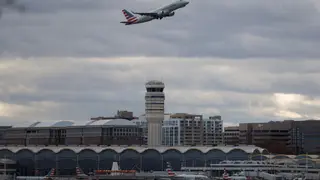
A nationwide flight ground stop on Friday disrupted over 2,300 flights and caused more than 8,000 delays across the U.S., with airports in Dallas-Fort Worth and Atlanta most affected. The Federal Aviation Administration attributed the outage to faulty maintenance by L3Harris Technologies during a fiber-optic cable upgrade, which overloaded legacy systems at key radar and communication sites. U.S. Transportation Secretary Sean Duffy stated normal operations should resume by Monday, while President Trump urged Congress to approve additional funding for modernizing air traffic control.
On Friday, November 13, 2026, a nationwide air travel ground stop grounded flights across the United States, disrupting over 2,300 flights and causing more than 8,000 delays by Sunday evening, according to FlightAware.com. Airports in Dallas-Fort Worth and Atlanta were among the hardest hit, each reporting over 250 delayed flights. The Federal Aviation Administration (FAA) traced the outage to faulty maintenance during a fiber-optic cable upgrade conducted by L3Harris Technologies Inc., a federal contractor. The upgrade involved replacing aging copper wiring with fiber-optic cables at key infrastructure sites, but an unexpected data surge overwhelmed legacy systems at two locations: a radar site in Amarillo, Texas, and a radio communications site in El Dorado, Arkansas. U.S. Transportation Secretary Sean Duffy confirmed that the disruption stemmed from this technical failure, emphasizing that recovery would take time due to the need to reposition aircraft and crews. The FAA had previously approved a $12.5 billion investment in air traffic control upgrades under President Trump in 2025, but on Friday, the administration requested an additional $50 billion in emergency funding to accelerate modernization. L3Harris acknowledged the incident’s impact and stated it was cooperating with the FAA investigation, having completed over 70% of the planned communications conversion. Meanwhile, Democratic lawmakers Rep. André Carson and Rep. Rick Larsen criticized the slow pace of spending, noting that despite $12.5 billion being appropriated, only $1 billion had been spent after 15 months. The National Air Traffic Controllers Association praised controllers for maintaining safety during the crisis but stressed the need to ensure protocols were followed.
The nationwide ground stop could have lasting ripple effects on public trust in air travel reliability and federal infrastructure management. Travelers, particularly those with time-sensitive plans or connecting flights, faced significant disruptions, with long-term consequences for business operations and personal schedules. Airlines may face increased costs from rebooking, crew scheduling adjustments, and potential customer compensation claims. The incident highlights systemic vulnerabilities in the nation’s aging air traffic control system, which relies on decades-old technology despite repeated calls for modernization. Comparable to the 2019 FAA software glitch that grounded flights across the U.S., this event underscores how outdated infrastructure can fail under stress, even during routine upgrades. While L3Harris and the FAA are investigating, it remains unclear whether oversight failures or inadequate testing protocols contributed to the outage. The political debate over funding—between urgency for immediate investment versus accountability for past spending—may influence future infrastructure policy. Congress may face pressure to act on the $50 billion request, but scrutiny over how funds were previously allocated could delay approval. What’s next could include a broader review of federal contractor oversight and long-term planning for critical infrastructure resilience.