Tyler Stephenson Emerges as Reliable Catcher Option Amid Limited Free-Agent Depth
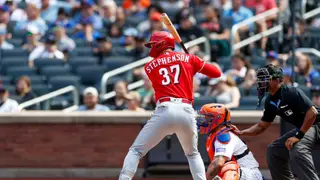
Catcher Tyler Stephenson, a former Cincinnati Reds player, is entering free agency with a solid but unspectacular track record. Though he has yet to hit 20 home runs in a season, he has shown consistent contact and all-field hitting. With few quality starting catchers available, Stephenson is viewed as a dependable backup or bottom-third lineup option for teams needing defensive stability behind the plate.
Tyler Stephenson, a 30-year-old catcher entering free agency in November 2026 after seven seasons with the Cincinnati Reds, has posted a career .241/.323/.404 slash line with 15 home runs and a 99 wRC+ in 2026. Though he has never hit 20 home runs in a season or posted an ISO above .191, his consistent contact, all-field hitting, and improved performance in the ABS (Automated Ball-Strike) system have elevated his value. In 2026, he challenged 136 pitches with a 68% success rate—second only to William Contreras—and contributed to 21 strikeouts through overturned calls. Despite defensive limitations, including struggles with framing and holding runners, his ability to leverage the ABS system has made him a more valuable asset than his traditional metrics suggest. The Reds, facing a dire catching situation with Jose Trevino as a backup and Alfredo Duno as an unproven prospect, are seen as likely suitors for Stephenson’s return, though financial constraints may complicate negotiations. Meanwhile, the Minnesota Twins, who may lose Ryan Jeffers to free agency, could view Stephenson as a viable fallback option if they aim to increase payroll slightly and bolster their catching depth with a mix of experience and youth.
The broader context reveals a weak market for starting catchers in 2026, making even modest performers like Stephenson valuable. Teams needing defensive stability behind the plate—especially those with young pitching staffs or limited catching prospects—are under pressure to act quickly. The Reds’ emotional attachment to Stephenson, evident when he was tearful at the trade deadline, underscores his importance to the organization despite his limitations. The Twins’ potential interest reflects a strategic pivot toward contending in 2027 while managing roster risk. What remains unresolved is whether Stephenson will command a contract in the $7–12 million AAV range, and if the Reds or another team will prioritize him over younger or more proven options. His long-term role—starter versus backup—also hinges on organizational plans for Duno’s development.
The emergence of Tyler Stephenson as a viable free-agent option highlights how scarcity in key positions can shift market dynamics, even for players with modest offensive profiles. With few elite catchers available and teams increasingly reliant on data-driven tools like the ABS system, players who contribute beyond traditional metrics may receive outsized value. This could signal a broader trend where defensive analytics and situational impact—like pitch challenge success—begin to outweigh raw statistics in contract negotiations. The situation mirrors the 2018–2019 market for catchers like Wilson Ramos and Yasmani Grandal, where teams paid premiums for reliability amid depth shortages. Here, Stephenson’s value may grow not from his bat but from his ability to influence games through system use and consistency. Teams with young pitching staffs or rebuilding cores may prioritize such players to stabilize their backstops without overextending payroll. What to watch for next is how other organizations evaluate catchers in the coming offseason—especially whether the ABS metric gains wider recognition as a standard valuation tool, potentially reshaping how teams assess defensive contributions across all positions.