COP31 First Week Highlights Momentum for Electrification and Fossil Fuel Phase-Out
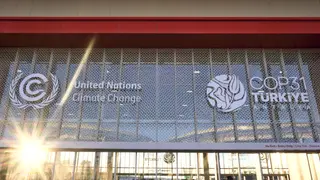
The first week of COP31 saw strong political backing for electrification, with leaders including Turkish President Erdoğan and Australian Prime Minister Albanese reaffirming its importance. The UK confirmed its support for the 35% by 2035 electrification pledge, while over 180 companies representing $1.69 trillion in revenue endorsed a joint statement on clean electrification. UNFCCC Executive Secretary Simon Stiell and Brazil’s COP30 team also emphasized the need to accelerate the transition away from fossil fuels.
The first week of COP31, held in 2026, marked a significant moment for global climate policy with strong political and corporate backing for accelerating clean electrification. Turkish President Erdoğan and Australian Prime Minister Albanese both emphasized electrification as a central priority during the Leaders’ Summit, while UK Prime Minister Andy Burnham confirmed the UK’s formal endorsement of the 35% by 2035 electrification pledge. Over 180 companies, collectively representing $1.69 trillion in revenue, backed the We Mean Business Coalition’s Seizing the Electric Advantage statement, which was formally handed to UNFCCC Executive Secretary Simon Stiell and referenced across the conference floor. Brazil’s COP30 team also presented a roadmap for fossil fuel phase-out, signaling momentum toward systemic energy transformation. This progress builds on prior commitments made at COP28, particularly those to triple renewable energy capacity, double energy efficiency, and transition away from fossil fuels—electrification being a key mechanism to achieve these goals. The We Mean Business Coalition, along with the COP Presidencies, launched the Global Implementation Accelerator and Türkiye’s Climate Implementation Bridge, backed by an initial $3 million, to scale practical climate solutions. Despite this momentum, it remains unclear whether the 35% pledge will be formally included in the final cover decision or how binding it will be. The second week will focus on translating political will into enforceable agreements and national policies that drive investment and implementation.
The growing emphasis on electrification at COP31 could significantly reshape energy markets, particularly in transport, industry, and buildings, where fossil fuel displacement is most urgent. As major economies like the UK, EU, and Australia align behind a shared electrification target, industries reliant on oil and gas may face accelerated disruption, while clean technology sectors—especially renewables, batteries, and smart grid infrastructure—could see increased investment. The involvement of over $1.69 trillion in corporate revenue signals that private capital is beginning to treat electrification not as a policy ideal but as an economic imperative. Comparable to the 2015 Paris Agreement’s role in catalyzing national climate plans, COP31 may be shaping a new phase where ambition is increasingly tied to measurable implementation pathways. However, the long-term impact depends on whether governments translate pledges into binding regulations and fiscal incentives. What remains uncertain is how developing nations—many of which lack grid infrastructure or financing—will participate in this electrification push without equitable support mechanisms. The next few weeks will reveal whether COP31 can bridge the gap between declaration and delivery, potentially setting a precedent for future climate summits.