Kirk Cousins Returns to Form as Vikings Defense Dominates Packers
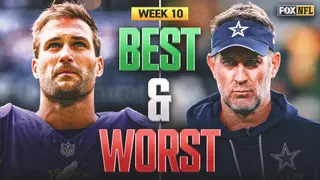
The Minnesota Vikings' defense delivered a standout performance, limiting the Green Bay Packers to just 10 points and recording eight sacks on quarterback Jordan Love. Kirk Cousins made an immediate impact in his return to the team, leading the offense with precision. The win marked the second time this season the Vikings have shut down the Packers' high-powered attack.
On November 17, 2026, the Minnesota Vikings delivered a dominant defensive performance against the Green Bay Packers, limiting them to just 10 points and recording eight sacks on quarterback Jordan Love, who faced pressure on a career-high 60% of his dropbacks. The game marked the second time this season the Vikings have shut down the Packers’ high-powered offense, completing a season sweep in the NFC North rivalry. According to Next Gen Stats, Love averaged only 2.33 seconds to throw—his second-quickest time in an NFL game—yet still faced relentless pressure, underscoring the effectiveness of Brian Flores’ defensive scheme. The Vikings forced four turnovers, a season-worst for Green Bay, and held them to 220 net yards, their second-lowest output of the year. This performance confirmed what analysts had long suspected: that Minnesota’s defense, despite not being a headline-grabbing unit, can consistently neutralize elite offenses, having allowed only 15.0 points per game in matchups against top-half scoring teams this season.
The backdrop to this victory lies in the Vikings’ strategic decision to re-sign Kirk Cousins after his brief absence, which was framed as a move to stabilize their offense amid inconsistency. His return proved pivotal, as he led the offense with precision and poise, complementing the defense’s dominance. Meanwhile, the Dallas Cowboys’ defensive collapse in Week 10—giving up 46 points and 584 yards to the 49ers—highlighted a deeper systemic issue under first-time coordinator Christian Parker. Despite owner Jerry Jones’ public support, mounting criticism has called for structural changes, with senior assistant Mike Pettine seen as a viable in-house replacement. The contrast between Minnesota’s defensive cohesion and Dallas’s disarray underscores how coaching decisions and personnel continuity can drastically alter team trajectories.
The Vikings’ defensive performance may reinforce the growing narrative that elite defense remains a critical differentiator in the modern NFL, where offensive firepower is increasingly common. This game could influence front-office decisions across the league, particularly regarding defensive coordinators and player development, as teams seek to replicate Minnesota’s ability to neutralize top-tier offenses. The contrast with the Cowboys’ struggles may also prompt more scrutiny of coaching tenure and accountability, especially when high-scoring offenses are undermined by poor defensive execution. Historically, such defensive dominance has often preceded playoff success—recall the 2010 Packers or 2013 Seahawks—but sustained excellence requires consistency beyond one standout game. The broader impact could extend to player valuation and contract negotiations, particularly for quarterbacks like Cousins, whose return to form may bolster his market value despite age. Meanwhile, the 49ers’ offensive explosion—highlighted by McCaffrey’s historic performance and the potential return of Mike Evans—could shift perceptions about team-building around elite playmakers. As the season progresses, teams with strong defenses may gain leverage in trades or free agency, especially if they can maintain this level of performance. What remains uncertain is whether Minnesota’s defense can sustain this form against other top offenses like the Eagles or Chiefs, and whether Dallas will make meaningful changes before it's too late to salvage a playoff push.