Ancient Neanderthal Genetic Variant Reduces Schizophrenia Risk and Alters Brain Structure
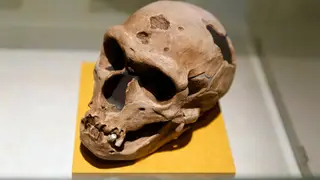
A specific segment of Neanderthal DNA is associated with a nearly 10% lower risk of developing schizophrenia in modern humans, according to a study using UK Biobank data. Carriers of this variant also exhibit a slight reduction in occipital lobe volume—about 0.85 cubic centimeters per copy—linked to visual processing. The findings highlight how ancient interbreeding continues to influence human brain development and mental health today.
A 2026 study published in the Proceedings of the National Academy of Sciences USA analyzed genetic data from the UK Biobank to identify a specific Neanderthal-derived DNA segment linked to a nearly 10% reduced risk of schizophrenia in modern humans, particularly among individuals carrying two copies. Each copy of the variant was associated with a reduction of approximately 0.85 cubic centimeters in occipital lobe volume—amounting to a 1.7 cm³ decrease in those with two copies. The research team, led by evolutionary geneticist Hugo Zeberg of the Karolinska Institute and Max Planck Institute’s Svante Pääbo, pinpointed the variant near the DAAM1 gene, which is involved in early brain development, though the precise mechanism remains unclear. This finding adds to growing evidence that Neanderthal DNA—largely inherited from a major interbreeding event around 47,000 years ago—still influences human biology today, affecting not just immunity and physical traits but also psychiatric risk and brain structure. The study found no association with other mental health conditions like depression, bipolar disorder, or ADHD, nor with intelligence, suggesting a highly specific biological role. Pääbo, a Nobel laureate in Physiology or Medicine (2022), emphasized the singular genetic origin of most Neanderthal contributions in modern humans, reinforcing the idea that these variants were preserved due to selective advantages. The team plans further genomic exploration, hinting at more discoveries on the horizon.
This discovery could influence how society views ancient genetic legacies—shifting perceptions from passive ancestry markers to active contributors to mental health and neurological function. Individuals with schizophrenia risk may one day benefit from genetic screening that includes Neanderthal variants, potentially informing personalized prevention strategies. The finding also raises ethical questions about how such data might be used in clinical or insurance settings, though no immediate applications are indicated. In broader terms, it reinforces the idea that human evolution is ongoing and shaped by interbreeding, not just gradual change—a concept previously seen with Neanderthal contributions to immune function and skin pigmentation. A comparable precedent is the discovery of Neanderthal DNA’s role in severe COVID-19 outcomes, which similarly revealed ancient genes with modern health consequences. The impact may extend beyond medicine into public understanding of human diversity and evolution. Researchers may now prioritize functional studies on other Neanderthal-derived segments, especially those near neurodevelopmental genes. What remains uncertain is whether the reduced occipital lobe size confers any cognitive trade-offs or if the schizophrenia-protective effect operates through immune or neural circuitry pathways. The story could shape future research agendas in psychiatry and evolutionary genetics, but its real-world implications remain speculative for now.