Trump Prioritizes White House Vanity Projects Amid Public Discontent Over Iran War and Inflation
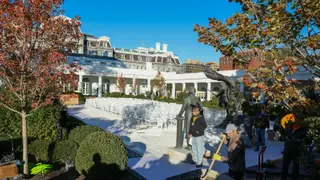
Following a significant voter turnout against the Iran war and rising living costs, President Donald Trump has shifted focus to expanding his Washington-based construction projects. The administration plans to repave Lafayette Square and extend a black granite walkway around the West Wing, with funding reportedly coming from the National Park Service. Critics argue these efforts reflect a broader pattern of neglecting national issues in favor of personal legacy-building.
On November 17, 2026, President Donald Trump announced new construction projects at the White House complex, including a $3 million repaving of Lafayette Square and an extension to the black granite walkway surrounding the West Wing—funded reportedly by the National Park Service. These developments follow a significant voter turnout opposing both the ongoing Iran conflict and rising inflation, according to senior administration analyses. Despite widespread public concern over national security and economic hardship, the administration has redirected attention and resources toward symbolic renovations. The White House claims these projects address “obvious blight” left by prior administrations, with the Interior Department framing them as part of a broader restoration effort for future presidents. However, critics point to a pattern of prioritizing personal legacy-building over governance, citing earlier actions such as the demolition of the East Wing to construct a $600 million ballroom, the destruction of Jackie Kennedy’s Rose Garden, and the controversial renovation of the Lincoln Memorial Reflecting Pool. The administration has also reportedly dismantled the Harry S. Truman Bowling Alley, removed trees across Washington, D.C., and demolished the Kennedy Center—all under the banner of “improvement.” No official confirmation has been provided on whether these projects are approved by Congress or if they violate existing federal funding restrictions.
The focus on symbolic White House renovations amid public discontent over war and inflation could deepen perceptions of elite detachment from everyday concerns. If the National Park Service is indeed diverting funds to presidential vanity projects, it may erode trust in federal stewardship of public spaces and historical landmarks. The broader impact may extend to civic engagement, as citizens who feel their priorities are ignored may disengage further from democratic processes. Historically, similar patterns—such as President Nixon’s expansion of the White House complex during a period of social unrest—have sparked criticism over misuse of public resources for personal or political branding. While Trump’s actions are not unprecedented in scale, their timing and scope during a crisis of public confidence may amplify backlash. What remains unclear is whether Congress will intervene to halt funding, or if legal challenges will emerge over the use of National Park Service funds for non-park purposes. The coming months could reveal whether such projects become symbolic of governance failure—or are absorbed into a broader narrative of presidential legacy-making that transcends policy outcomes.