Top Desk Accessories to Boost Productivity and Comfort for PC Users
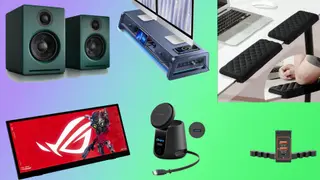
Tom's Hardware recommends 10 desk upgrades such as monitor risers with USB charging, modern charging hubs, and high-quality speakers to enhance workspace functionality. These tools improve organization, connectivity, and comfort without requiring expensive hardware upgrades.
In November 2026, Tom’s Hardware published a guide recommending 10 desk accessories to enhance productivity and comfort for PC users, highlighting practical upgrades that don’t require replacing core hardware. The article spotlighted specific products such as the Anker MagStand Charging Station, which supports magnetic Qi charging and includes a retractable 60W cable for simultaneous device charging, and the Ikuai 11-in-1 Hybrid USB Hub, offering 11 ports with up to 10 Gbps speeds, external power, and individual port control. Other featured items included the Vaydeer Volume Control Knob with media buttons, the MEKASS L-shaped elbow pad and wrist rest, and the Elgato Stream Deck Mini with six customizable buttons. These devices were presented as solutions for users facing constraints in upgrading high-end components—such as the scarcity of graphics cards and delayed releases like GTA VI, expected no earlier than 2027. The article emphasized that while major hardware upgrades are currently impractical for many, small, functional accessories can significantly improve workspace ergonomics, organization, and connectivity. The author, Matt Safford, noted personal use of these products across both office and home setups, lending credibility to their real-world utility.
The story reflects a broader trend in consumer tech where users seek incremental improvements amid supply chain and pricing challenges. The referenced scarcity of GPUs and expensive RAM has made full system upgrades less feasible, pushing consumers toward peripheral and workspace enhancements. Companies like Anker, Asus, AudioEngine, and Elgato are capitalizing on this shift by offering specialized, high-functionality accessories. The article’s focus on USB hubs, charging stations, and ergonomic accessories underscores a growing market demand for tools that streamline workflows without requiring technical expertise or large investments. However, the long-term impact of these accessories on user productivity remains unmeasured, and the sustainability of such niche products in a saturated market is uncertain. What’s not yet known is whether these accessories will become standard in home office setups or remain optional upgrades.
The article’s emphasis on desk accessories as productivity enhancers could influence how consumers prioritize spending during tech downturns. As high-end PC components remain inaccessible or prohibitively priced, users may increasingly invest in ergonomic and connectivity tools that offer immediate, tangible benefits. This shift may strengthen the market for peripheral devices, particularly those that integrate multiple functions—like charging hubs and media controllers—potentially boosting sales for brands like Anker and Elgato. The trend may also encourage manufacturers to design more modular, space-efficient accessories that cater to compact or multi-use workspaces. A comparable earlier case is the rise of mechanical keyboards in the mid-2010s, which, despite not being essential, became a cultural and functional standard in home offices and gaming setups. The current focus on desk accessories may follow a similar trajectory, evolving from niche upgrades to expected components of a modern workspace. What to watch for next is whether these tools will be adopted by employers as part of remote work stipends or integrated into corporate office design, potentially reshaping workplace ergonomics standards.