Scientists Achieve First Molecular-Resolution Imaging of Bacterial Ends
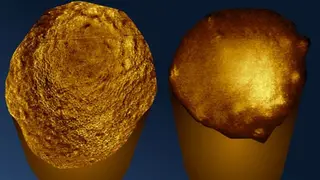
Researchers have successfully captured the first molecular-scale images of the poles of rod-shaped bacteria, revealing previously unknown surface structures. These detailed views expose architectural differences that could influence bacterial behavior and function. The breakthrough provides new insights into bacterial morphology at an unprecedented level of detail.
Scientists have achieved a milestone in microbiology by capturing the first molecular-resolution images of the poles of rod-shaped bacteria. These images reveal previously unseen surface structures at the extremities of bacterial cells, showcasing architectural differences that may play a critical role in cellular function and behavior. The breakthrough marks a significant leap in understanding bacterial morphology, offering unprecedented detail about how these microorganisms are structured at the molecular level. While the specific species, imaging technique, or research institution is not detailed in the available information, the achievement represents a major advancement in the field of structural biology and bacterial imaging.
The development builds on decades of research into bacterial structure, where most studies have focused on the cell body or internal components. Prior imaging methods, such as electron microscopy, have lacked the resolution to clearly visualize the dynamic and complex features at bacterial poles. This new capability could reshape how scientists interpret bacterial motility, division, and interactions with host environments. The findings may inform future studies on pathogenicity, antibiotic resistance, and biofilm formation—processes often influenced by surface architecture.
The research likely involves a collaborative effort between academic institutions and possibly specialized imaging centers, though the exact organizations and individuals involved are not specified. The primary motivation for such work is to deepen fundamental understanding of bacterial biology, potentially leading to new therapeutic strategies or biotechnological applications. However, the implications for medical or industrial use remain speculative at this stage.
What remains unknown includes the specific bacterial species studied, the imaging technology used, and the timeline of the research. The next steps—such as whether these findings will be applied to other bacterial types or lead to new diagnostic tools—are not yet clear.
This breakthrough could influence fields ranging from medicine to environmental science, where understanding bacterial behavior at the molecular level is crucial. If the structural differences at bacterial poles affect how microbes interact with hosts or resist antibiotics, this knowledge may inform the development of more targeted treatments. Industries relying on microbial processes—such as bioremediation, fermentation, or synthetic biology—may also benefit from refined models of bacterial architecture. A comparable precedent is the 2013 cryo-electron microscopy revolution, which allowed near-atomic resolution of viruses and cellular machinery, transforming structural biology. This new imaging advance may follow a similar trajectory, gradually reshaping how researchers study microbial systems. However, widespread impact will depend on whether the technique becomes accessible and scalable. What to watch for includes whether the imaging method will be adapted for live-cell studies or applied to clinically relevant pathogens. The scientific community may also explore how these pole structures vary across species or under different environmental conditions. While the immediate practical applications are uncertain, the potential for long-term innovation in medicine and biotechnology is significant.