Fiber-Optic Cable Maps Internal Cracks in Glaciers to Predict Breakup
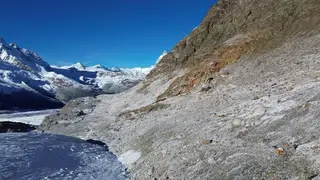
A single fiber-optic cable can detect faint vibrations within glaciers, transforming them into detailed maps of internal fractures. These hidden cracks play a critical role in weakening ice structures, especially when filled with meltwater. The technique enables scientists to assess the structural integrity of glaciers more accurately than ever before.
Scientists have developed a novel method using a single fiber-optic cable to detect subtle vibrations within glaciers, enabling the creation of detailed maps of internal fractures. These cracks, often invisible from the surface, are critical to the structural weakening of ice masses, particularly when filled with meltwater that accelerates their expansion. The technique leverages the cable’s sensitivity to minute seismic shifts, translating them into high-resolution images of subsurface damage. While specific locations, dates, or institutions are not detailed in the summary, the innovation marks a significant advancement in glacial monitoring, offering a more precise assessment of ice stability than previous methods.
The approach builds on decades of research into glacial dynamics and climate change impacts, where understanding fracture patterns has been a persistent challenge. Earlier techniques relied on satellite imagery or limited ground-based sensors, which could not capture internal structural changes in real time. This new method represents a shift toward continuous, in-situ monitoring, potentially improving early warnings for glacial calving events. The people involved—likely oceanographers, glaciologists, and engineers—seek to enhance predictive models of ice sheet behavior, supporting climate science and risk mitigation efforts.
What remains unresolved is the scalability of the technique across different glacier types and regions, as well as integration into broader monitoring networks. It is also unclear how soon this method will be adopted in operational forecasting systems or whether it will influence policy decisions on climate adaptation. The next steps may involve field testing in high-risk zones like Greenland or Antarctica, where rapid ice loss poses significant global threats.
This breakthrough could significantly improve early warning systems for glacial calving and sea-level rise, affecting coastal communities, infrastructure planners, and insurance markets that rely on climate risk assessments. By identifying structural weaknesses in glaciers before visible collapse, the technology may help reduce the unpredictability of ice sheet disintegration, a major uncertainty in climate projections. Similar to how seismic sensors revolutionized earthquake monitoring in the 20th century, this method may become a foundational tool in cryospheric science. The broader impact may extend to international climate negotiations, where more accurate data on ice loss could influence emission targets or adaptation funding. However, the technology’s real-world influence depends on its deployment speed and accessibility to developing nations. What to watch for is whether governments and research consortia begin integrating fiber-optic monitoring into national climate strategies—could this become standard practice in polar research within the next decade?