Veteran Lefty Robbie Ray Enters Free Agency After Strong 2026 Season
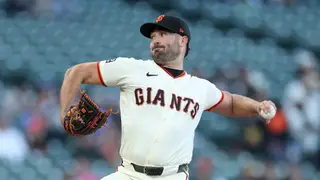
Thirty-five-year-old starting pitcher Robbie Ray, who posted a 3.59 ERA and 140 strikeouts in 165.2 innings across 30 starts for the San Francisco Giants and San Diego Padres in 2026, is set to enter free agency. Known for his All-Star appearances in 2017 and 2025, and a Cy Young Award in 2021 with the Toronto Blue Jays, Ray remains a sought-after veteran arm. His strong performance and elite offspeed pitch values suggest continued interest from teams seeking rotation depth.
Veteran left-handed pitcher Robbie Ray, 35, has entered free agency following a 2026 season in which he posted a 3.59 ERA and 140 strikeouts across 165.2 innings in 30 starts split between the San Francisco Giants and San Diego Padres. Though his 3.59 ERA and 1.35 WHIP suggest solid performance, underlying metrics paint a more concerning picture: a 4.82 xERA, a 4.69 FIP, and a 12% walk rate, indicating potential regression. Ray’s elite offspeed pitches—particularly his changeup and curveball—ranked in the 95th and 79th percentiles, respectively, but his inability to limit hard contact and induce ground balls has raised questions about sustainability. His 2026 salary was $25 million, and he is projected to land a 1-2 year deal with an average annual value between $12–18 million. Ray’s career includes a Cy Young Award in 2021 with the Toronto Blue Jays, two All-Star selections (2017, 2025), and a standout 248-strikeout season. He has played for six franchises since his 2014 debut with the Detroit Tigers, including stints in Arizona, Seattle, and Toronto. The Blue Jays, who lost multiple starters to injury in 2026—including Bowden Francis, Jose Berrios, and Cody Ponce—may seek a left-handed veteran to bolster their rotation’s depth. Miami Marlins, with a strong top three (Alcantara, Perez, Meyer), may also consider Ray to add left-handed balance, especially given the vulnerability of their projected back-end arms, Janson Junk and Ryan Gusto. The outcome remains uncertain, as teams weigh Ray’s proven durability and leadership against his declining peripheral stats and injury-prone track record.
Ray’s free agency could influence rotation stability across multiple MLB teams, particularly those with injury-plagued pitching staffs. His potential signing may signal a broader trend of teams prioritizing veteran depth over high-upside young arms, especially in markets where long-term health concerns are persistent. The Blue Jays, having relied heavily on a fragile rotation in 2026, may view Ray as a stabilizing presence, though his high walk rate and poor xERA could limit his long-term value. Similarly, the Marlins might use him to diversify their right-handed-heavy rotation, though his performance metrics suggest he may not be a true frontline starter. A comparable case is that of David Price in 2015, who signed with the Red Sox after a strong season but struggled with consistency, highlighting the risk of overvaluing past success. What remains unclear is whether teams will prioritize Ray’s innings-eating ability and leadership over his declining peripherals. The market may ultimately reflect a cautious approach—offering shorter deals with performance incentives—making his landing spot a key indicator of how much teams value experience versus measurable dominance.