Tiny Parasitic Arthropod from Late Cretaceous May Have Clung to Mosasaurs
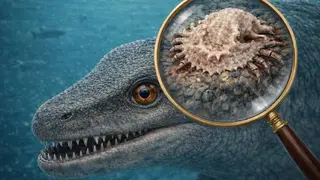
A newly identified species, Alsasuacaris dirkeysermansi, a 1.6-mm-long arthropod with a spiny, crab-like shell, lived in Late Cretaceous seas around 70 to 66 million years ago. Found in the Netherlands, the fossil shows no preserved limbs, but its flattened body and upward-facing eye-like structures suggest it may have lived as a parasite on large marine reptiles such as mosasaurs. It is the first known member of its family to be preserved in three dimensions with its underside visible.
Paleontologists have identified a new species of ancient arthropod, Alsasuacaris dirkeysermansi, from a 1.6-mm fossil discovered in the Meerssen Member of the Maastricht Formation in the southeastern Netherlands. Dating to the Late Cretaceous, approximately 70 to 66 million years ago, the specimen represents the first three-dimensional example of its family, the Alsasuacarididae, with its underside preserved—a rare find that offers unprecedented anatomical insight. Though no limbs were preserved, the creature’s flattened body and large, upward-facing eye-like structures suggest a parasitic lifestyle, possibly clinging to large marine reptiles like mosasaurs or bony fish. The fossil was collected by Diederik Eysermans, a Belgian fossil collector with four decades of experience in the region, and later donated to the Nationaal Oertijdmuseum, where it was studied by Dr. René Fraaije and colleagues. This discovery marks only the third known member of the Alsasuacarididae and extends the genus’s known geographic and temporal range, as the previously known species, A. nostradamus, comes from northern Spain and dates to the Albian, over 100 million years ago. The find adds to the growing evidence that small, specialized arthropods were more diverse in Mesozoic marine ecosystems than previously recognized, particularly in fine-scale fossil assemblages. The absence of preserved appendages means the exact feeding or attachment mechanism remains speculative, and the function of the upward-facing structures is still unclear. Researchers emphasize that while cyclidans resemble crabs, they are only distantly related and likely occupied different ecological roles.
The discovery of Alsasuacaris dirkeysermansi could influence how paleontologists approach the study of microfossils in marine sedimentary layers, particularly in regions with rich fossil records like the Maastricht Formation. By highlighting the value of detailed screening for millimeter-sized organisms, it may encourage more systematic exploration of fine-grained sediments, potentially uncovering other rare taxa previously overlooked. This could shift research priorities in paleoecology, emphasizing the importance of small-bodied organisms in reconstructing ancient food webs. Comparable to the 2003 discovery of Maastrichtiocaris rostrata, this find underscores how even well-studied areas can yield new insights when examined with new methods. The broader impact may extend to museum curation and public engagement, as such tiny, exotic creatures can captivate audiences and illustrate the diversity of life in the deep past. Institutions may invest more in high-resolution imaging and public outreach around microfossils. However, the implications for evolutionary biology remain speculative—without evidence of behavior or ecology, it is unclear how these arthropods fit into larger evolutionary narratives. What may follow is a wave of targeted searches in similar Late Cretaceous strata worldwide, especially in regions with comparable marine deposits, potentially revealing more parasitic or specialized forms.