Giants' Cam Skattebo announces end to backflip celebration following Aidan Hutchinson's injury
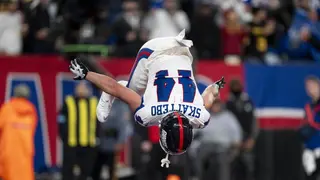
New York Giants running back Cam Skattebo has announced he will no longer perform backflips after scoring touchdowns. The decision comes in response to the severe injury sustained by Detroit Lions defensive end Aidan Hutchinson during a recent game. Skattebo cited respect for the player and the gravity of the injury as reasons for ending the celebration.
On November 18, 2026, New York Giants running back Cam Skattebo announced he would no longer perform backflips after scoring touchdowns, citing the severe injury sustained by Detroit Lions defensive end Aidan Hutchinson during a game the previous Sunday. Hutchinson tore his ACL after a celebratory leap following a sack, an incident that deeply affected Skattebo, who described the moment as “hard to see.” Skattebo, who had previously resumed the backflip celebration after recovering from an ankle injury during the prior season, now stated he was mentally committed to abandoning the move. He acknowledged the possibility of reviving the celebration only in extreme circumstances such as a playoff game, but emphasized that it would not occur in regular-season play. The decision reflects a growing sensitivity in professional sports toward player safety and the unintended consequences of celebratory actions, particularly those involving acrobatic movements that could lead to injury. The event occurred during a regular-season matchup between the Lions and an unnamed opponent, though the specific date and opponent are not detailed in the report. Skattebo’s choice is notable not only for its personal nature but also for its symbolic weight in a league where player expression and safety often collide.
Skattebo’s decision may signal a broader cultural shift in the NFL, where athletes’ celebratory behaviors are increasingly scrutinized for their potential to cause harm. While backflips have long been a signature move for some players, Hutchinson’s ACL tear—resulting from a post-sack leap—has spotlighted the risks of such actions, especially when performed in high-impact moments. This incident could influence other players to reconsider similar celebrations, potentially leading to a quieter, more restrained style of post-touchdown expression. Comparable cases include the NFL’s 2014 crackdown on helmet-to-helmet hits and the 2021 ban on certain types of celebration dances deemed excessive or dangerous. The long-term impact may extend to team culture, where coaches and front offices could begin promoting safer, more mindful celebrations as part of player development. While it remains unclear whether the league will formally address such moves, the story could prompt discussions about player safety protocols beyond the field. What to watch for next is whether other players adopt similar changes, and whether the NFL might issue guidance on celebratory conduct—especially in light of increasing scrutiny over player welfare.