Liam Lawson Confident of F1 2027 Seat Despite Tsolov's Strong F2 Performance
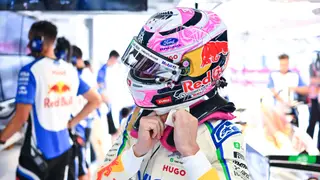
Liam Lawson stated he had little doubt he would secure a seat in Formula 1 for the 2027 season, even as Red Bull protege Nikola Tsolov made a strong impression in his rookie year in F2. Lawson was officially confirmed as a Racing Bulls driver for 2027, underscoring his team's confidence in his development. His comments reflect growing assurance in his long-term F1 future.
Liam Lawson has publicly expressed confidence in securing a Formula 1 seat for the 2027 season, despite strong performances from Red Bull junior Nikola Tsolov during his rookie campaign in the FIA Formula 2 Championship. Lawson’s commitment to Racing Bulls for the 2027 season has been officially confirmed, signaling the team’s clear intent to develop him as a future F1 driver. The announcement underscores Racing Bulls’ long-term investment in Lawson’s progression, positioning him as a central figure in their F1 strategy. While Tsolov’s impressive start in F2 has drawn attention and raised questions about competition for a seat, Lawson has dismissed concerns, stating he has “little doubt” about his future in F1.
This development follows a pattern of Red Bull’s strategic talent pipeline, where young drivers are nurtured through junior series before being fast-tracked to F1. Tsolov, as a Red Bull protege, represents a potential alternative path, but Lawson’s confirmed contract with Racing Bulls—likely a Red Bull-owned team—suggests a prioritization of his development. The team’s decision to lock in Lawson for 2027 indicates they view him as a more advanced prospect, despite Tsolov’s early F2 success. The outcome may hinge on how both drivers perform in the remainder of the 2024 F2 season and whether Tsolov can maintain momentum.
What remains unresolved is whether Red Bull will maintain a single F1 seat for Lawson or if the team will expand to a second car, potentially accommodating Tsolov in the future. The broader implications for the F2 championship and Red Bull’s driver development program are also uncertain. It is not yet known how Tsolov’s performance will influence Red Bull’s long-term planning or whether Lawson’s confidence will be validated by future results.
The story highlights the high-stakes nature of F1 driver recruitment, where early promises and team commitments shape careers and team strategies. Lawson’s confidence, backed by a confirmed Racing Bulls seat, may influence how young drivers perceive their futures in motorsport, reinforcing the value of early team loyalty and development pathways. Tsolov’s strong F2 start could inspire other junior drivers, showing that even within elite programs, competition remains fierce. This situation mirrors the 2018-2019 period when Max Verstappen and Pierre Gasly were both in Red Bull’s system, with Gasly eventually getting a seat despite Verstappen’s early dominance. That case showed how performance and team strategy can diverge from initial expectations. Here, Tsolov’s rise may prompt a reevaluation of how Red Bull balances talent, performance, and long-term planning. The outcome could affect how junior series like F2 are viewed as proving grounds for F1, potentially increasing their prestige and influence on team decisions. What to watch for is whether Tsolov’s performance continues to challenge the status quo, and how Racing Bulls’ 2027 lineup evolves.