Johnson's 'Ponzi scheme' comment sparks partisan fury over Social Security reform
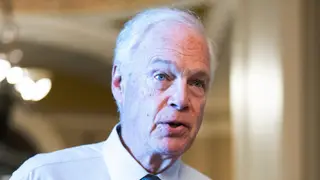
Senator Ron Johnson, R-Wis., ignited controversy by calling Social Security a 'Ponzi scheme' in a Fox Business interview, drawing sharp rebuke from Democrats who accused him of frightening seniors. Despite later suggesting the system could be fixed, Johnson maintained his criticism, arguing that addressing the nation's debt is essential to preserving benefits. The debate highlighted deep partisan divisions over how to handle the program's long-term financial challenges.
In a high-stakes political moment on November 19, 2026, Senator Ron Johnson, R-Wis., ignited a firestorm by labeling Social Security a “Ponzi scheme” during a Fox Business interview, a characterization that drew immediate and fierce backlash from Democrats. Johnson, chair of the Senate Budget Committee, later walked back the remark as “imprecise” but maintained his core argument: that the program’s long-term solvency hinges on addressing the nation’s broader fiscal crisis, including massive debt and deficits. Despite calling Social Security a “scam” and claiming it “can’t be fixed,” he simultaneously asserted that the system could be made solvent through policy action, including a law to prevent benefit cuts even if the trust fund is depleted by 2032. The Social Security Board of Trustees projects a 22% benefit reduction by that date without reform. Johnson’s contradictory statements—denouncing the system while advocating for its preservation—highlighted deep partisan divides over how to address the program’s financial challenges. Democrats, including Sen. Mark Warner, D-Va., accused Johnson of exploiting fear to advance political goals, while Republicans like Sen. Bernie Moreno, R-Ohio, and Democrats like Sen. Elizabeth Warren, D-Mass., have proposed lifting the payroll tax cap on income. A bipartisan proposal from Sens. Durbin, Cassidy, Kaine, and Cornyn aims to mandate a 50-year funding plan via the Social Security Advisory Board. While all major parties acknowledge the need for reform, consensus remains elusive, with Republicans emphasizing economic growth and Democrats pushing for revenue increases through tax policy.
Johnson’s inflammatory language may amplify public anxiety among seniors, a group already vulnerable to misinformation about entitlements, potentially undermining trust in federal programs. The term “Ponzi scheme” carries strong emotional weight and could influence voter sentiment in upcoming elections, especially among older demographics. While the underlying fiscal challenge is real—Social Security’s projected 22% cut by 2032 is based on official actuarial data—Johnson’s rhetoric risks polarizing debate and discouraging bipartisan compromise. Comparable to the 1990s debates over welfare reform, where emotional framing shaped policy outcomes, this moment may reflect a broader trend where political messaging overshadows technical solutions. The absence of a legislative fix despite repeated proposals suggests that political will, not technical feasibility, is the primary obstacle. What may follow is increased public pressure on lawmakers to act, possibly through new legislative initiatives or public awareness campaigns. The next phase could involve the incoming Democratic leadership under Sen. Tim Kaine, who has expressed openness to a stability-focused approach. Whether rhetoric will give way to policy or deepen division remains uncertain.