Bipartisan Group of House Lawmakers Launches AI Safety and Innovation Caucus
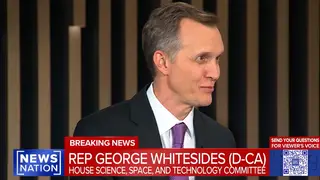
A coalition of over two dozen House lawmakers has formed the AI Safety and Innovation Caucus, led by Reps. George Whitesides (D-Calif.), Don Beyer (D-Va.), and Nathaniel Moran (R-Texas). The group aims to balance AI innovation with regulatory safeguards ahead of the next Congress. Its goal is to develop responsible legislation that maintains U.S. leadership in AI while addressing emerging risks.
On November 19, 2026, a bipartisan coalition of over two dozen U.S. House lawmakers launched the AI Safety and Innovation Caucus, co-led by Rep. George Whitesides (D-Calif.), Rep. Don Beyer (D-Va.), and Rep. Nathaniel Moran (R-Texas). The group was formed ahead of the next Congress as lawmakers seek to shape federal policy on artificial intelligence before major legislative sessions begin. The caucus aims to develop responsible legislation that fosters innovation while addressing emerging risks associated with AI, with the stated goal of maintaining U.S. global leadership in the technology. The initiative reflects growing congressional awareness of AI’s transformative potential and its attendant dangers, such as misinformation, job displacement, and algorithmic bias.
The formation of the caucus follows increasing scrutiny of AI by federal agencies and earlier bipartisan efforts in the Senate, such as the AI Initiative Act. The timing suggests a strategic effort to position the House as a key player in shaping national AI policy before broader legislative action. Whitesides, who is positioning himself as a leading voice on AI in Congress, emphasized the caucus’s role as a “conduit” for refining and advancing legislation. The involvement of both Democratic and Republican members signals a rare moment of cross-party cooperation on a high-stakes technological issue. However, the specific legislative proposals, regulatory frameworks, or enforcement mechanisms the group will prioritize remain unclear.
What remains unresolved includes the caucus’s ability to influence the final shape of federal AI legislation, especially given the fragmented nature of current congressional efforts. The group’s success may depend on its capacity to build consensus across ideological lines and to coordinate with the Senate and executive branch. It is also not yet known how the caucus will address issues like AI transparency, data privacy, or international competition, particularly with regard to China. The next steps will likely involve drafting policy frameworks, holding hearings, and engaging with industry stakeholders—though the timeline and outcomes remain uncertain.
The formation of the AI Safety and Innovation Caucus could shape how federal policy balances innovation with risk mitigation in a rapidly evolving technological landscape. If successful, the group may help prevent regulatory fragmentation and provide a consistent framework for AI development across sectors such as healthcare, finance, and defense. This could stabilize investment and encourage responsible innovation, particularly among startups and mid-sized tech firms that may otherwise face uncertainty. However, the impact on public trust in AI systems remains uncertain—especially if safeguards are perceived as too weak or too restrictive. The caucus may also influence broader institutional dynamics, such as the role of federal agencies like NIST and the FTC in setting standards, and could affect how private companies design and deploy AI. A comparable precedent is the 2018 formation of the Congressional Blockchain Caucus, which helped normalize digital asset regulation but faced challenges in translating interest into enforceable law. The AI caucus may face similar hurdles in moving from dialogue to action. What to watch for includes whether the group can produce draft legislation before the next Congress convenes, how industry and civil society respond, and whether it can maintain bipartisan cohesion amid rising political polarization. Its long-term influence may depend less on immediate outcomes than on shaping the national conversation around AI governance.