California Investigates Former Trump Press Secretary Over False Legal Credentials
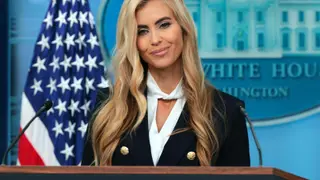
Katie Zacharia, who served as White House press secretary for five days in 2026, is under investigation by the State Bar of California for falsely presenting herself as a licensed attorney. Despite claiming to be a lawyer on Fox News and Newsmax, Zacharia never passed the bar exam and held no legal credentials in Texas, Washington, D.C., or China, where she falsely claimed to have taken the test. The probe stems from a complaint by the Campaign for Accountability, which alleged she misled the public while acting in a legal capacity for a nonprofit linked to Ric Grenell.
Katie Zacharia, who served as White House press secretary for five days in 2026, is under investigation by the State Bar of California for falsely representing herself as a licensed attorney. Despite claiming legal credentials on Fox News and Newsmax, Zacharia never passed the bar exam in any U.S. jurisdiction—Texas, Washington, D.C., or California—and her assertion that she took the bar in China is legally impossible, as China does not permit foreign bar exams for non-residents. Her J.D. from Pepperdine Caruso Law in 2011 was obtained without subsequent licensure. She previously held the title of “general counsel” for a nonprofit linked to Ric Grenell in California, a role requiring legal credentials that she did not possess. The investigation was prompted by a complaint filed on October 14 by the Campaign for Accountability (CFA), a watchdog group, which alleged that Zacharia misled the public by operating in a legal capacity without proper credentials. Zacharia admitted she never passed the bar but claimed that using the term “lawyer” instead of “attorney” clarified her status, a distinction that did not prevent public and professional scrutiny. Her brief tenure as press secretary ended amid criticism of her performance and revelations about her false credentials.
The broader context includes prior reporting by Popular Info, which first exposed her lack of licensure, and the CFA’s ongoing effort to hold public figures accountable for misrepresenting professional qualifications. The State Bar of California, which regulates legal practice in the state, now faces the task of determining whether Zacharia’s conduct constitutes a violation of rules governing unauthorized practice of law or misrepresentation. What remains unresolved is whether disciplinary action will follow, including potential sanctions or public censure. It is not yet known if similar investigations are underway in other states where she claimed legal work experience. The outcome could set a precedent for how media figures are held accountable for professional misrepresentation, especially when such claims influence public perception of legal expertise.
The case raises concerns about the credibility of media personalities who present themselves as legal experts without formal qualifications, potentially undermining public trust in both journalism and the legal profession. As more individuals leverage media platforms to project authority, the line between commentary and professional representation blurs, especially when such claims influence public discourse on policy or legal matters. The investigation could prompt stricter scrutiny of on-air credentials, particularly in high-profile roles where misinformation may have broader societal consequences. A comparable precedent is the 2018 case involving a self-proclaimed “legal analyst” who faced backlash after being exposed for lacking bar admission, leading to calls for clearer disclosure standards. This situation may prompt media outlets to implement verification protocols for guest experts. What to watch for next is whether the California Bar’s findings lead to broader regulatory reforms or influence how legal credentials are disclosed in public communications. The outcome could also affect how nonprofits and political organizations vet staff with legal titles, especially in states with strict licensing laws.