Earth's Oxygenation Occurred in Three Distinct Phases, with Oceans Lagging Behind
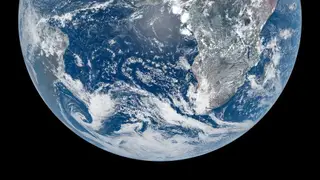
New research reveals that Earth's atmosphere underwent three major oxygenation events over billions of years, each preceding the deep ocean's ability to accumulate oxygen. The process began with cyanobacteria evolving photosynthesis around 2.4 billion years ago, releasing oxygen into water and eventually the atmosphere. Despite these pulses, the deep oceans consistently lagged behind in oxygen levels, indicating a complex, multi-stage transition in Earth's early biosphere.
New research led by geochemists Haiyang Wang and Chao Li from Chengdu University of Technology reveals that Earth’s atmosphere underwent three distinct oxygenation phases, each preceding the deep ocean’s ability to accumulate oxygen. The first, the Great Oxygenation Event (GOE), occurred between 2.4 and 2.1 billion years ago, driven by cyanobacteria’s evolution of oxygenic photosynthesis. The second phase, previously thought to be the Neoproterozoic Oxygenation Event, now appears to have occurred between 1.3 and 1.0 billion years ago, while the third, the Paleozoic Oxygenation Event, is now dated to 0.42 to 0.36 billion years ago—slightly earlier than earlier estimates. Crucially, the study finds that deep ocean oxygenation lagged behind atmospheric changes by approximately 200 million years during the Neoproterozoic phase and 30 million years during the Paleozoic. This delay underscores the complexity of Earth’s coupled atmosphere-ocean system, where atmospheric oxygen rose in pulses but deep ocean waters remained anoxic for extended periods. The researchers used advanced sulfate triple-oxygen isotope analysis (Δ′17O) to refine these timelines, offering a more precise proxy for atmospheric oxygen levels than traditional ocean redox indicators. This method leverages the isotopic signature of atmospheric oxygen preserved in sulfate minerals, allowing clearer dating of oxygenation events. Prior studies had debated whether oxygenation was gradual or stepwise, with some placing the Neoproterozoic and Paleozoic events much later. This work reinterprets those later dates not as atmospheric milestones but as indicators of delayed deep ocean oxygenation. The implications for understanding the evolution of complex life, which depends on oxygen availability, are significant. What remains unresolved is how exactly the deep oceans eventually became oxygenated—whether through changes in ocean circulation, tectonic activity, or biological feedbacks—and whether similar patterns occurred on other planets.
The findings could reshape how scientists interpret the timeline of life’s evolution on Earth, particularly the rise of complex multicellular organisms, which may have been delayed by prolonged anoxia in deep oceans. This has implications for astrobiology and the search for habitable exoplanets, where atmospheric oxygen is often seen as a biosignature. If deep oceans lag behind atmospheric oxygenation, it suggests that the presence of oxygen in the air does not guarantee oxygenated marine environments—potentially affecting how we assess planetary habitability. The study may also influence climate modeling and paleoceanographic research, prompting a reevaluation of how oxygen levels interact with carbon cycling and climate change over geological time. A comparable earlier case is the reevaluation of the Great Oxygenation Event itself, which once seemed abrupt but is now seen as part of a longer, multi-stage process. Future research may focus on identifying the mechanisms that finally allowed oxygen to penetrate deep ocean basins—possibly through changes in ocean stratification or biological innovation. Scientists may also explore whether similar oxygenation lags occurred during other planetary transitions, such as the rise of oxygen on Mars or in early Earth’s moon. The next steps could involve refining isotopic proxies and integrating data from sedimentary records across different continents to build a more complete picture of Earth’s redox evolution.