High Blood Eosinophil Levels Linked to Better Outcomes in Hormone Receptor-Positive Breast Cancer
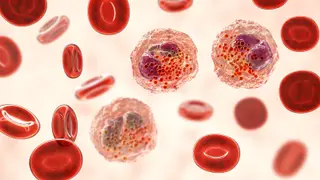
Higher levels of circulating eosinophils were significantly associated with improved recurrence-free and distant metastasis-free survival in patients with hormone receptor-positive, HER2-negative breast cancer. The study found that elevated eosinophil counts predicted better responses to CDK4/6 inhibitors and provided additional prognostic value beyond existing genomic tests. These findings suggest eosinophil levels could serve as a simple, accessible biomarker for risk stratification and treatment planning.
A large retrospective study led by Zhi-Ming Shao, MD, PhD, of Fudan University Shanghai Cancer Center, found that higher circulating eosinophil counts—specifically above 0.08 × 10⁹/L—were significantly linked to better recurrence-free survival (RFS) and distant metastasis-free survival (DMFS) in patients with hormone receptor-positive, HER2-negative breast cancer. Among 472 patients followed for a median of 83.1 months, those with eosinophil levels above the median had a 54% lower hazard for RFS (HR 0.46, 95% CI 0.28–0.77) and a 56% lower hazard for DMFS (HR 0.44, 95% CI 0.25–0.78), with results holding in multivariable models. The findings were replicated in a validation cohort, reinforcing the robustness of eosinophils as a prognostic marker. Notably, high eosinophil counts predicted enhanced benefit from CDK4/6 inhibitors, suggesting a predictive role beyond prognosis. The study highlights a previously underexplored immune dimension—circulating eosinophils—offering additive value to existing genomic tools like the 21-gene risk score. This builds on earlier work linking lymphocyte counts and neutrophil-to-lymphocyte ratios to outcomes in breast cancer, but extends the focus to the myeloid compartment, which has been historically overlooked. The authors argue that eosinophils may reflect systemic immune competence, potentially priming antitumor T-cell responses. Despite the promise, the study is retrospective and lacks prospective validation. It remains unknown whether eosinophil levels can be modulated therapeutically or whether routine blood testing for eosinophils will be adopted in clinical practice.
The discovery could reshape how clinicians assess risk and treatment response in the most common breast cancer subtype, affecting millions of patients globally. Because eosinophil counts are already measured in standard complete blood counts, integrating them into risk stratification tools could be low-cost and widely accessible, particularly in resource-limited settings. If validated prospectively, this biomarker may help personalize adjuvant therapy, reducing overtreatment in low-risk patients and ensuring CDK4/6 inhibitors are reserved for those most likely to benefit. The broader impact may extend to oncology drug development, where biomarker-driven trial designs could improve efficiency. A comparable precedent is the adoption of the Oncotype DX test, which transformed early-stage breast cancer management by translating genomic data into clinical decisions. However, unlike that test, eosinophils are not yet embedded in widely used prognostic calculators like PREDICT breast. The next step will be determining whether eosinophil levels can be used in real-time clinical decision-making, especially as part of dynamic risk models. Whether this leads to new guidelines or commercial tools remains uncertain, but the potential for widespread adoption is high if future trials confirm causality and utility.