Senate Advances Major Overhaul of Federal Permitting System for Energy and Infrastructure Projects
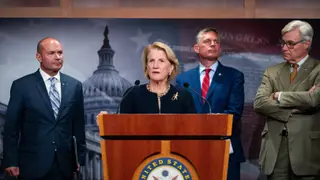
The Senate passed a sweeping bill on November 19, 2026, that would reform federal permitting for power lines, wind and solar farms, mining, and oil drilling. The 62-33 vote included support from 31 Democrats and two Republicans, Josh Hawley and Mike Rounds, despite opposition from more than half the Democratic Caucus. The legislation aims to streamline reviews under major environmental laws and strengthen the Federal Energy Regulatory Commission’s authority over interstate transmission.
On November 19, 2026, the U.S. Senate passed a sweeping federal permitting reform bill by a 62-33 vote, advancing a major overhaul of how energy and infrastructure projects are reviewed and approved across the country. The legislation, sponsored by bipartisan leaders including Senators Shelley Moore Capito (R-W.Va.), Sheldon Whitehouse (D-R.I.), Mike Lee (R-Utah), and Martin Heinrich (D-N.M.), targets key environmental laws such as the National Environmental Policy Act (NEPA), the Endangered Species Act, and the Clean Water Act. It aims to streamline project reviews, strengthen the Federal Energy Regulatory Commission’s (FERC) authority over interstate transmission lines, and ensure that electricity ratepayers are not burdened by costs tied to new data center infrastructure. The bill also includes provisions to prevent future administrations from arbitrarily revoking permits based on ideology—addressing concerns raised during the Trump administration’s delays of wind and solar projects. Despite opposition from 31 Democrats and two Republicans, including Josh Hawley and Mike Rounds, the measure cleared the Senate after a procedural vote on a substitute amendment, though no additional amendments were considered due to a stalemate. Oregon Senators Jeff Merkley and Ron Wyden blocked further changes, objecting to the lack of simple-majority voting on certain amendments, including one to ban data centers on federal lands and another to limit presidential power to impose tariffs on clean energy components. The original manager’s amendment, which would have refined exemptions and increased funding for historic preservation, was not adopted.
The bill now moves to the House of Representatives, where Speaker Mike Johnson (R-La.) has signaled support, and where Democratic lawmakers such as Scott Peters (D-Calif.) and Nikki Budzinski (D-Ill.) have expressed backing. The New Democrat Coalition’s recent leadership change, with Budzinski becoming chair, may influence the bill’s trajectory in the lower chamber. Industry groups including the American Petroleum Institute, the American Clean Power Association, and the U.S. Chamber of Commerce have endorsed the legislation, citing the current permitting process as a major barrier to domestic investment. The White House has also issued a statement of administration policy in favor of the bill. However, unresolved tensions remain over how to balance environmental protections with project acceleration, particularly regarding data center development and presidential authority over energy projects. What remains unknown is whether the House will adopt the Senate’s version without significant amendments, and how the final product may be affected by political dynamics post-Thanksgiving recess.
This legislation could significantly reshape the pace and feasibility of building critical energy and infrastructure projects across the U.S., potentially accelerating the transition to clean energy while also enabling expanded fossil fuel development. By streamlining environmental reviews and limiting executive overreach, the bill may reduce project delays that have plagued wind, solar, and transmission line developments, especially in regions with complex regulatory landscapes. The focus on FERC authority and ratepayer cost protections may stabilize investment in grid modernization, particularly for data centers that demand massive power inputs. However, the exclusion of key amendments—such as those restricting data center development on federal lands—raises concerns about long-term environmental and land-use impacts, especially in ecologically sensitive areas. The bill may also set a precedent for future regulatory reform, echoing the 2018 FAST-41 law that expedited transportation projects, but with broader implications across energy and environmental policy. What remains to be seen is whether the House will maintain the Senate’s balance between efficiency and accountability, and how state-level opposition or legal challenges may emerge. The outcome could influence investor confidence, climate policy implementation, and the federal government’s role in managing infrastructure development in the coming decade.