Fossilized Forest in England Reveals How Early Plants Transformed Earth's Landscapes
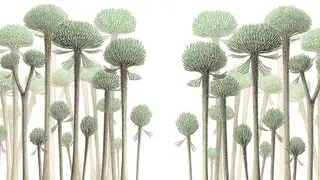
Scientists have discovered the world's oldest known forest in England, dating back to the Devonian period. These early plants, lacking true roots, stabilized soil and created habitats for the first land-dwelling arthropods. Their presence significantly altered Earth's atmosphere and surface conditions.
Scientists have uncovered the world’s oldest known forest in England, dating to the Devonian period, a pivotal era in Earth’s geological history. These ancient plant communities, which predate the evolution of true roots, played a crucial role in stabilizing soil and transforming terrestrial environments. Their presence marked a significant shift from barren landscapes to complex ecosystems capable of supporting life beyond the oceans. The discovery provides direct evidence of how early vegetation altered surface conditions, contributing to changes in atmospheric composition, including increased oxygen levels and reduced carbon dioxide. The fossilized remains offer a rare glimpse into the transition from aquatic to terrestrial dominance, highlighting the foundational role of plants in shaping Earth’s biosphere.
While the specific location within England is not detailed, the find underscores the importance of the Devonian period—approximately 419 to 359 million years ago—as a time of radical biological innovation. Prior to this, land surfaces were largely devoid of complex life, with only simple organisms like mosses and algae. The development of vascular plants, even without true roots, allowed for greater structural complexity and nutrient transport, enabling colonization of land. This shift likely enabled the emergence of the first land-dwelling arthropods, which depended on plant-derived habitats and organic matter.
The researchers involved are likely paleobotanists and geologists from UK-based institutions, though their names and affiliations are not specified. Their work aims to deepen understanding of early terrestrial ecosystems and the co-evolution of life and environment. The discovery may influence future research directions, prompting exploration of similar sites in other regions. What remains unknown is the full extent of the forest’s spatial coverage, the exact species composition, and the precise mechanisms by which these plants altered atmospheric chemistry.
This discovery could reshape public and scientific understanding of Earth’s early ecological transitions, emphasizing the foundational role of plant life in shaping habitable land. It may influence environmental education, reinforcing the idea that ecosystems are not static but evolve through biological innovation. Institutions focused on climate history and Earth system science may use the findings to refine models of ancient atmospheric change, potentially informing climate projections. A comparable precedent is the 2010 discovery of early plant fossils in Canada’s Gaspé Peninsula, which similarly challenged assumptions about the timeline of terrestrial colonization. That find, like this one, highlighted how plant life may have driven atmospheric shifts earlier than previously thought. The current discovery may prompt renewed interest in paleobotanical surveys, especially in underexplored regions of Europe. While the immediate impact is likely confined to academic circles, the story could inspire broader public engagement with Earth’s deep history, particularly in science communication and museum exhibits. It may also influence policy discussions on ecosystem resilience, by illustrating how life can transform planetary conditions over time. What to watch for next is whether the findings lead to new fossil-hunting expeditions or revisions in geological timelines.