EU Approves 1 Billion Euros in Military Aid for Ukraine Amid Escalating Attacks
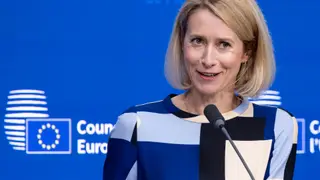
The European Union approved 1 billion euros in military funding through the European Peace Facility to support Ukraine's defense efforts, including drones, air defenses, and ammunition. This decision follows a massive Russian attack on Ukraine that killed civilians, damaged embassies in Kyiv, and violated Polish airspace. EU High Representative Kaja Kallas emphasized that Russia's actions contradict its stated desire for peace, while Europe also agreed on a unified representation in future peace negotiations.
On November 20, 2026, the European Union approved 1 billion euros in military aid for Ukraine through the European Peace Facility (EPF), marking a significant escalation in collective defense support. The funds will be used to jointly procure drones, air defense systems, ammunition, electronic warfare equipment, radar systems, and explosives, with delivery to Ukraine expected by the end of 2027. This decision followed a large-scale Russian aerial assault on the same day that killed civilians, damaged multiple embassies in Kyiv, and breached Polish airspace—acts that EU High Representative Kaja Kallas condemned as contradictory to Russia’s stated interest in peace. The EPF, initially established in 2022 with a total of 6.6 billion euros in funding, had been stalled due to Hungary’s veto until a breakthrough agreement was reached in September 2026, allowing the fund to be operationalized. The EU has now agreed on a unified representation for future peace negotiations, including France, Germany, Italy, Poland, the UK, and the EU itself—addressing past exclusion despite Europe’s central role as Ukraine’s primary financial and logistical backer. While Ukraine has offered unconditional ceasefires during U.S.-mediated talks, Russia has maintained maximalist demands, rendering negotiations stagnant. The unresolved question remains whether this increased military support will shift the battlefield dynamics or merely prolong the conflict without a diplomatic breakthrough.
The EU’s decision to approve 1 billion euros in military aid underscores a growing European commitment to Ukraine’s defense, potentially reinforcing Kyiv’s ability to resist further offensives. This could stabilize Ukraine’s military posture and deter further Russian aggression, particularly in contested regions. However, the continued escalation risks deepening regional instability, especially if Russian retaliation targets neighboring NATO members or escalates into broader conflict. The establishment of a unified EU negotiating team may enhance Europe’s diplomatic leverage, though its effectiveness depends on alignment with U.S. and Ukrainian positions. Historically, similar coordinated foreign support—such as the Marshall Plan after WWII—demonstrated how collective aid can rebuild nations and shape long-term security frameworks. In this case, the EU’s role may evolve from supplier to key architect of post-war reconstruction and security architecture. What remains uncertain is whether military support alone can compel Russia to negotiate in good faith, or whether the conflict will persist without a political solution. The coming months may reveal whether the EU’s unified stance translates into tangible diplomatic progress or merely sustains a war of attrition.