Early Childhood Obesity at Age 4 Predicts High Risk of Adolescent Obesity, Study Shows
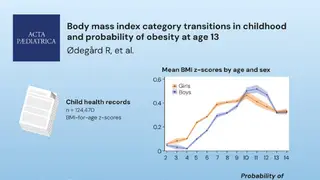
A large-scale study of 124,470 Norwegian children found that those classified as obese at age 4 have a 38% to 51% chance of being obese at age 13, compared to only 8% to 10% for those who were merely overweight. The research highlights that early obesity is a stronger predictor of later obesity than overweight status, even when BMI increases later. The findings support targeted early interventions for high-risk children and broader preventive strategies.
A longitudinal study of 124,470 children from Trondheim and Bergen, Norway, analyzed 360,957 routine health measurements taken between 1991 and 2017 at ages 2, 4, 6, 8, and 13. The research found that children classified as obese at age 4 had a 38% to 51% likelihood of being obese at age 13, compared to only 8% to 10% for those who were merely overweight at the same age. Even among children whose BMI later increased from normal weight to overweight, the risk of adolescent obesity remained low, suggesting that early obesity is a stronger predictor than later weight gain. The study used international BMI cutoffs and tracked transitions across categories, revealing that over half of children who were obese at age 13 had been in the normal-weight range at age 6. The lead author, Professor Rønnaug Astri Ødegård from the Norwegian University of Science and Technology and Trondheim University Hospital, emphasized the need for both targeted treatment for high-risk children and broad preventive strategies. Co-author Dr. Waaler Bjørnelv questioned the current practice of alerting parents only after a child is labeled overweight in school, suggesting that such interventions may not be the most effective use of resources. The study, set for publication in Acta Paediatrica in December 2026, underscores the importance of early intervention but leaves open how best to implement population-wide prevention or treat early obesity effectively.
This study could reshape how public health systems approach childhood obesity, shifting focus from reactive monitoring to proactive, universal prevention. By showing that early obesity is a stronger predictor of later obesity than transient overweight, it may prompt health authorities to prioritize screening and support for children identified as obese at age 4, potentially reducing long-term healthcare burdens. Schools and pediatric clinics may reconsider how and when to intervene, possibly moving away from late-stage alerts to earlier, family-centered support programs. The findings echo earlier concerns about the long-term consequences of early-life weight patterns, similar to how childhood hypertension was once overlooked but is now recognized as a key risk factor. However, the study does not specify how to scale effective interventions or measure their cost-effectiveness, leaving open questions about implementation. The broader impact may extend to policy, insurance models, and parenting education, particularly in countries with similar healthcare systems. What remains uncertain is whether universal programs can be as effective as targeted ones, and how to balance equity with efficiency in public health spending.