Medicare for All Gains Momentum in Congress but Faces Major Legislative Hurdles
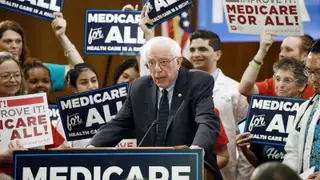
Despite growing support among incoming Democratic lawmakers, experts say Medicare for All is unlikely to pass soon due to insufficient Senate votes and the need for incremental reforms first. Senator Bernie Sanders and Democratic leadership have proposed step-by-step expansions, including lowering the Medicare eligibility age and adding dental, vision, and hearing coverage. A recent memo outlines a 'First 100 Hours' plan focused on capping out-of-pocket costs and advancing toward universal coverage through comprehensive study.
In November 2026, the idea of Medicare for All (MFA) has gained renewed momentum among incoming Democratic lawmakers, with figures like Sen.-elect Abdul El-Sayed (D-Mich.) and Rep.-elect Peggy Flanagan (D-Minn.) publicly endorsing it as a top legislative priority. Despite this enthusiasm, experts including Katie Keith of Georgetown University and Mark Weller of Polsinelli law firm caution that MFA is unlikely to pass soon due to insufficient Senate votes—Democrats hold only 56 seats, short of the 60 needed to overcome a filibuster and the 67 required to override a presidential veto. A September memo from the Democrats’ Cost-of-Living Healthcare Working Group proposed a “First 100 Hours” plan, which includes capping out-of-pocket costs for Medicare beneficiaries at $5,000 annually and expanding coverage to include dental, vision, and hearing services. Senator Bernie Sanders, a long-time advocate of single-payer healthcare, has also advanced an incremental strategy focused on lowering the Medicare eligibility age and expanding benefits to children and underserved populations. These steps are seen as more politically viable than a full transition to MFA. The broader context includes the unresolved fiscal challenges of the U.S. healthcare system, such as the $40 trillion public debt and the solvency of Social Security and Medicare, as well as concerns from former ACA architect Wendell Primus, who argues that MFA’s projected $32 trillion 10-year cost is unfinanceable and could alienate employers and voters facing higher taxes. What remains unresolved is whether Democrats can balance campaign promises with the realities of divided government, committee assignments, and stakeholder resistance, particularly from hospitals, insurers, and providers wary of systemic change.
The push for Medicare for All, while energizing progressive factions, may have limited immediate impact on the broader healthcare landscape, given the political hurdles in the Senate and the fiscal constraints highlighted by experts. If incremental reforms like expanded Medicare benefits and out-of-pocket caps are enacted, they could ease financial strain for millions of seniors and low-income Americans, potentially improving access and reducing medical debt. However, such changes may not significantly alter the underlying cost structure of the U.S. healthcare system, which remains among the highest globally. The broader impact could be a shift in political discourse, where the focus moves from radical overhaul to pragmatic expansion, possibly paving the way for future public option models. A comparable precedent is the Affordable Care Act’s passage in 2010, which began with incremental reforms before evolving into a broader system. The current moment may follow a similar trajectory—where initial steps build momentum for more comprehensive change, but only if Democrats can navigate internal divisions and maintain public support. What to watch for is whether the “First 100 Hours” plan gains traction in the new Congress, and how quickly the debate shifts from idealism to fiscal feasibility.