Hyperscale data centers consume up to 18.6% of Oregon’s electricity, study finds
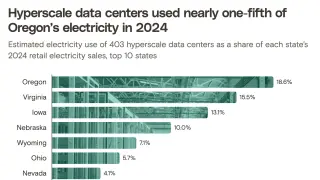
A Harvard-led study published in Nature Sustainability estimates that 403 U.S. hyperscale data centers consumed about 82 terawatt-hours of electricity annually in 2024, equivalent to nearly 8 million homes. In Oregon, these facilities accounted for 18.6% of retail electricity sales, while Virginia and Iowa saw 15.5% and 13.1% respectively. The study highlights significant state-to-state variation, with data center electricity use reaching double-digit shares in several states despite making up only 2% of total U.S. electricity consumption.
In 2024, 403 U.S. hyperscale data centers consumed an estimated 82 terawatt-hours of electricity—equivalent to nearly 8 million homes—accounting for about 2% of national electricity use, according to a Harvard-led study published in Nature Sustainability. In Oregon, these facilities consumed 18.6% of retail electricity sales, a dramatic rise from 3% in 2015 and a projected 23% by 2025. Virginia and Iowa followed with 15.5% and 13.1% shares, respectively. The study’s authors used verified facility locations and power capacity data to model usage, though they acknowledge the actual figure may be higher due to unaccounted smaller or non-hyperscale facilities. The data centers’ growth has been fueled by the AI boom, with electricity demand surging as server farms expand rapidly. This shift has outpaced state-level planning: Oregon’s Department of Energy admitted in its 2026 biennial report that it lacks policies to regulate emissions from data center load growth. Meanwhile, Dominion Energy in Virginia reported that data centers accounted for 28% of electricity sales from its Virginia subsidiary—nearly double the study’s estimate—highlighting the gap between official data and utility reports. The lack of federal tracking mechanisms, as noted by Senators Warren and Hawley, leaves policymakers, utilities, and communities without reliable data, despite proposed legislation like the Bipartisan American Affordability and Jobs Act, which would mandate EIA to track data center electricity use. The emissions impact is significant, with the study estimating annual CO₂ emissions equivalent to those of Jordan, Kenya, or Guatemala, depending on regional grid mixes, ranging from 10 g CO₂/kWh in hydropower-rich Washington to 325 g CO₂/kWh in fossil-fuel-heavy Virginia.
The rapid expansion of data centers could reshape regional energy markets and climate policy, particularly in states like Oregon and Virginia where their electricity share has surged. As these facilities grow, they may strain grid reliability, influence utility pricing, and complicate decarbonization goals, especially where power comes from fossil fuels. Communities near data center hubs may face rising electricity costs and environmental trade-offs, while grid operators struggle to balance supply amid unpredictable demand spikes. This situation mirrors earlier concerns over industrial energy use in the 1990s, when large manufacturing plants disrupted local grids, but with a key difference: data centers are often located in rural or underdeveloped areas, shifting environmental burdens without proportional local benefits. The lack of federal oversight could delay meaningful climate action, as emissions from data centers remain invisible in national inventories. Moving forward, the success of proposed EIA data collection mandates may determine whether states can adapt their energy policies in time. If implemented, such tracking could enable targeted regulations, carbon pricing, or renewable procurement requirements—potentially reshaping how digital infrastructure is powered.