Bosnia Federation’s Prime Minister and Interior Minister Indicted in Police Appointment Scandal
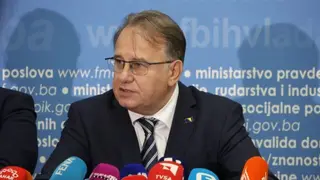
Bosnia and Herzegovina’s Federation Prime Minister Nermin Niksic and Interior Minister Ramo Isak have been indicted alongside five others over alleged irregularities in police appointments and promotions. The charges include abuse of office, influence peddling, and colluding to appoint Vahidin Munjic as head of the Federation Police Administration despite legal disqualifications. The alleged misconduct spanned from April 2023 to August 2024 in Sarajevo Canton and Mostar.
Nermin Niksic, Prime Minister of the Federation of Bosnia and Herzegovina, and Ramo Isak, the Federation’s Interior Minister, have been indicted alongside five others for alleged misconduct in police appointments and promotions between April 2023 and August 2024, primarily in Sarajevo Canton and Mostar. The charges include abuse of office, influence peddling, and colluding to appoint Vahidin Munjic as head of the Federation Police Administration (FUP) despite his legal disqualifications. The prosecution alleges that Niksic and Isak, in their official capacities, proposed and signed government decisions enabling Munjic’s appointment and extension of his mandate, violating Federation law. Other accused individuals include former FUP chief Munjic, Muhamed Ohranovic (a police officer), Arijana Huseinovic Ajanovic (head of the PM’s office), Ervin Musinovic (an inspector), and Mirela Bubalo (a department head in the Interior Ministry). The indictment further claims that intermediaries facilitated Munjic’s appointment and influenced the hiring of his relative as acting director of BH Post, while others used their positions to secure FUP employment. Isak is also accused of exceeding his authority in August 2024 by assigning Munjic to lead the FUP Criminal Investigation Department, potentially allowing him to remain in control until November 2025. The prosecution has requested that Niksic and Isak be barred from holding public office, and has proposed extended bans for others involved. The case, filed by the Special Department of the Federation Prosecutor’s Office for Corruption and Organised Crime (POSKOK), will now be reviewed by the Special Department of the Federation Supreme Court for confirmation.
This indictment could significantly undermine public trust in the Federation’s law enforcement and political institutions, particularly in a region where institutional integrity has long been questioned. The involvement of top officials like the Prime Minister and Interior Minister in alleged corruption at the police administration level may intensify concerns about systemic impunity and the politicization of security forces. If proven, the case could prompt broader reforms in personnel appointments and oversight mechanisms within Bosnia’s complex federal structure. The fact that the prosecution seeks to bar high-ranking officials from public office signals a rare attempt to enforce accountability, though the outcome remains uncertain given the political sensitivity of such cases. A comparable precedent is the 2018 indictment of Serbia’s then-Interior Minister Nebojša Stefanović over similar allegations, which sparked nationwide protests and judicial scrutiny. In Bosnia, where past efforts to combat corruption have often stalled due to political resistance, this case may serve as a test of whether independent institutions can operate without interference. What remains to be seen is whether the Supreme Court confirms the indictment, how the accused will respond, and whether the case leads to tangible institutional changes or becomes another stalled investigation.