Tanker Suffers Fire After Unknown Projectile Strike in Strait of Hormuz, UKMTO Reports
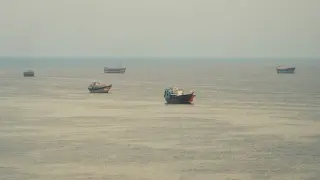
A tanker caught fire after being struck by an unknown projectile in the Strait of Hormuz, 8 nautical miles north of Khasab, Oman, according to the UK Maritime Trade Operations (UKMTO). No casualties or environmental damage were reported. Iran's Revolutionary Guards claimed the vessel hit a mine, while shipping through the strait remains disrupted due to ongoing regional tensions following the February 28 conflict between Iran and the US-Israeli coalition.
On Friday, a tanker ignited after being struck by an unknown projectile in the Strait of Hormuz, 8 nautical miles north of Khasab, Oman, according to the UK Maritime Trade Operations (UKMTO). The incident occurred during a period of heightened regional tension following a conflict between Iran and a US-Israeli coalition on February 28, which has since disrupted maritime traffic through the strait. No casualties or environmental damage were reported, though the fire caused significant concern due to the strategic importance of the waterway. Iran’s Revolutionary Guards claimed the vessel had struck a mine, a narrative echoed by Iranian state media, while UKMTO described the event as a projectile strike, leaving the nature of the attack unconfirmed. The Strait of Hormuz, which handles nearly one-fifth of global crude oil shipments, remains a flashpoint due to ongoing military posturing and the recent closure efforts by Iran. The incident underscores the vulnerability of commercial shipping in a region where geopolitical instability has directly impacted global energy flows.
The key actors include UKMTO, which monitors maritime security and reports incidents to international stakeholders; Iran’s Revolutionary Guards, which assert mine detonation as the cause and may be seeking to justify or escalate regional claims; and shipping operators navigating the strait amid uncertainty. Iran’s assertion of a mine suggests an effort to frame the incident as a defensive or retaliatory act, potentially aiming to deter Western or allied vessels. Meanwhile, the lack of clarity on the projectile’s origin—whether from a naval vessel, drone, or land-based launcher—raises concerns about escalation risks. What remains unresolved is whether the strike was deliberate or accidental, and who is responsible. The absence of a confirmed investigation or international response further complicates accountability. It is not yet known if the vessel was targeted specifically or if the attack was part of broader regional instability.
The incident could further destabilize global energy markets, especially if disruptions in the Strait of Hormuz persist. Given that the strait carries nearly one-fifth of the world’s oil, even temporary closures or delays may trigger price volatility, affecting consumers and economies reliant on stable fuel supplies. Shipping companies may reroute vessels around Africa, increasing costs and delivery times—potentially impacting inflation and supply chains. The broader impact may extend to insurance premiums for maritime transport, which could rise sharply in response to perceived risks. A comparable precedent is the 2019 attacks on oil tankers in the Gulf, which led to a spike in insurance rates and prompted the US to deploy naval forces, heightening tensions. That episode demonstrated how a single incident can escalate into a regional security crisis. In this case, the lack of clear attribution and conflicting narratives from Iran and UKMTO may delay coordinated international responses. What to watch for next is whether the US or its allies will increase naval presence or initiate a formal investigation, and how Iran will respond to any such move—potentially escalating the situation further.